My On-Line Interview – The Next Big Thing Project

Here’s the skinny, my “next big thing,” as prompted by author John Copenhaver last week:

What is the title of the book?

Werecat: The Rearing
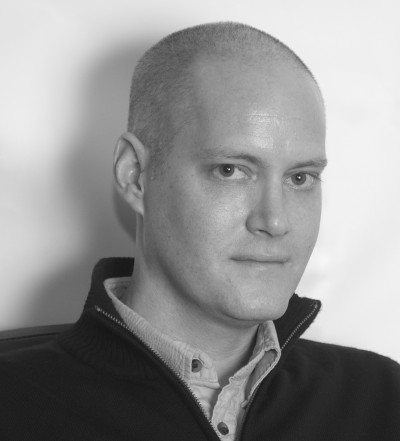
DSC_1329


Where did the idea come from for the book?

It started as an experimental piece. I got turned on to shapeshifter and vampire stories only recently, and, as with most everything I read, those stories made me think: how could I write a great story in that vein from a totally queer point-of-view? Not just with gay or lesbian sidekick characters – I wanted to create a gritty, sexy love story between two men that was central to the plot, and really central to a fantasy world. I’m also fascinated by cats, so writing the fantasy aspect came pretty naturally to me.

What genre does your book fall under?

Urban fantasy

What actors would you choose to play the part of your characters in a movie rendition?

I actually blogged about that subject before my book got picked up by a publisher. What writer doesn’t daydream about casting her/his work? For Werecat, it’s extra fun because I think feline shapeshifters would have to be sexy and dark. I imagine an underground world populated  by hot, scruffy men, high-shouldered and lean, sort of a throw-back to the grunge or heroin-chic model trend of the 90’s. They would have to have great eyes too.

My main character Jacks is a lost, rebellious college drop-out, and I’d be delighted to cast François Arnaud from the Showtime series The Borgias in that role. Jacks’ love interest Benoit would have to be smoking hot with a dangerous vibe. My first pick is Michael Fassbender. Then there’s a supporting character Farzan who may or may not get in between Jacks and Benoit. Farzan is tightly-wound and kind of goofy. He makes me think of Kal Penn from Howard and Kumar.

What is the one sentence synopsis of your book?

Werecat: The Rearing is about a young man who goes to Montréal for Spring Break, gets picked up by a handsome drifter, and ends up on a terrifying and erotic journey into the world of feline shapeshifters.

How long did it take you to write the first draft of the manuscript?

Werecat: The Rearing is the first book in a series of novellas, which are 20-40K words apiece. I wrote the first draft in about three weeks.

Who or what inspired you to write this book?

Allison Moon’s lesbian werewolf novel Lunatic Fringe was a major departure point. Beyond her excellent re-imagining of werewolf mythology, her book made me think about the similarities between the shapeshifter trope and the experience of being queer, both in obvious ways like having to hide and being misunderstood, and in ways that are important to me politically and spiritually.

I think there’s something liberating about being able to inhabit two worlds. Queer people learn how to fit in, and sometimes pass within a heterosexual world, and we also cross “genders” at least in our private lives if not publicly. The Native American idea of two-spirit intrigues me – possessing both a female and a male aspect – and I could go on about that subject extensively. Suffice it to say, when I started writing about gay, feline shapeshifters, I found opportunities to explore the different facets of having a dual nature — socially, sexually, and politically.

I also worked a good bit of cat mythology – ancient world and native – into the story. Retold myth and legend is a fairly steady thread in everything I write.

Is your book out in print, upcoming from a publisher and/or represented by an agency?

NewVPBlogo72dpiWerecat: The Rearing will be published by Vagabondage Press and is upcoming in May.

Authors I am tagging next for The Next Big Thing Project:

Lydia Sharp – YA contemporary, fantasy, and romance author and blogger extraordinaire

Charlie Vazquez – Avant-garde author, poet, and master-of-ceremonies for New York City’s underground literati

Christopher Keelty – Fantasy/sci-fi author and civil rights activist

C.A. Clemmings – Author of literary novels and short fiction


Were there gay people in Atlantis?

If you have browsed my blog a little bit, you know one of my inspirations is the legend of Atlantis. I’ve done a lot of research on the topic, from ancient Greek sources to the work of early twentieth century pseudo-anthropologists to the websites of Atlantis conspiracists.

But so far, I haven’t found an answer to the most important question: Were there gay people in Atlantis?

Here, I will attempt to answer that question. I firstly will lay out some general considerations.

You could probably say the world is divided into people who believe Atlantis existed, and people who don’t.

On the believing side, we have Plato, Jules Verne, Edgar Cacy, and a lot more people than you might expect, as I discovered when the topic came up at a recent dinner party.

On the disbelieving side, we have just about every modern day archaeologist, anthropologist and ancient world historian.

But let’s forget about those authorities because it’s fun to believe.

There are many theories about what Atlantis was and how it came and went. To simplify things, I’ll group the theories into two, overarching themes.

The first theme involves alien intervention. Here we have the theories that aliens came to earth during prehistoric times and created, or taught humans how to create, an amazing city. The “proof” of an ancient world Atlantis is linked to other “unexplainable” achievements in the ancient world like the pyramids of Egypt, and the mountain top city of Machu Pichu, and the monoliths of Easter Island.

A variation on this theme is that Atlanteans were aliens themselves, and their return to a distant world explains the mystery of the disappearance of Atlantis. Another variation is that Atlantis disappeared because the aliens took the human inhabitants away with them.

All of that relies on quite a bit of speculation. The second theme looks to scientific evidence.

The end of earth’s last ice age was roughly around the time when Plato said Atlantis existed: 10,000 B.C.E.. This was a period of climactic change, thus it’s possible that a prehistoric civilization was buried beneath the flood waters of a rising ocean.

In fact, archaeologists are currently working on an excavation on the southern coast of Spain that appears to be a buried city, dated from around 10,000 B.C.E..

At this point, you may very legitimately be asking yourself: what does this have to do with whether or not there were gay people in Atlantis? Now I have to admit, I’ve rather lost my train of thought on that matter.

I guess what I do have to say is that wherever and whenever people (or aliens) existed, I believe that some of them were gay. I think that kind of diversity is an innate part of humankind, and that homosexuality plays a role in our species ability to thrive.

Maybe scientists will find a genetic rationale for my deeply held belief. For instance, having a gay child might enhance the survival of his siblings. That could be a function of biology. It could be social. Gay children often grow up to help with the caretaking of their nephews and nieces. In some cultures, they are the ones who stay home to take care of their aging parents.

Or, it could be that the cultural and spiritual contributions of gay people nurture our collective human soul. At the risk of validating what some might call a stereotype, I think that many gay people live on the social periphery as artists, and performers, and healers of one sort of another. As such, gay people enhance the quality of life in their communities while not (as frequently) participating directly in the core of those communities — family and politics, for example.

Gay people in Atlantis may have fit in similarly. In many native world cultures,  there is a spiritual role for non-heteronormative men, e.g. the “two spirit” tradition of Native Americans, the hijra of India. These traditions could have existed in a lost, ancient world civilization.

I guess my fascination with the question: “how could Atlantis have existed?” takes inspiration from my pondering on why gays exist.

On Cat Mysticism

While doing research for my feline shapeshifter series WERECAT (forthcoming in March 2013 by Vagabondage Press), I came across some interesting stuff.

Cat mysticism is about as old as recorded history, or older if you consider pre-historic cave drawings.

Paleolithic cave drawing depicting a lion attacking what appears to be a wildebeast

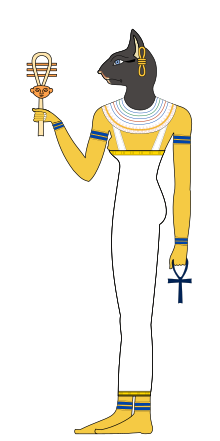
We tend to associate cats with ancient Egypt. Bastet was a feline goddess, depicted with the head of a cat, and regarded as the protector of the pharaoh. In later dynasties, Sekhmet gained prominence as a lioness war goddess. Pet domesticated cats have been found mummified along with their wealthy owners in Egyptian tombs.

Bastet, ancient Egyptian goddess

But cats were also important in many other ancient world religions. The Hindus worshipped a fertility goddess Shashti who was pictured riding a cat. In Central America, the jaguar was deified by the Olmecs and the Mayans, and associated with war and power. The tradition of their shamans dressing in cat pelts and skulls is perhaps the origin of the werecat legend.

Artist’s rather hunky depiction of an Aztec jaguar warrior

Many centuries later, the Aztecs were known for their “jaguar warriors” who were an elite military unit that wore the costume of the cat to inspire fear in their enemies.

I’ve always been fascinated by cats, and I think there is something godlike and mysterious about them. They’re uniquely capable of dominating their environment. They overpower smaller creatures, sometimes just because they can it seems.

Alternately, they are remarkably tender and protective of their young; well, female cats are at least. House cats also make a compelling case for having preternatural abilities if you’ve ever been alone with a cat in a room when it’s staring in a corner, or at the ceiling, apparently at nothing, with its tail swinging back and forth. Do they see dead people?

Then, there’s the fact that they spend about two-third of their lives asleep, leaving one to wonder: what’s going on in their heads when they’re sleeping. Or maybe they’re off in another world, astral-projecting somewhere.

Note: Factoids mentioned above were drawn mainly from an article by Sarah Hartwell, “The Role of Cats in Myth and Religion” , and a little from Wikipedia.

WERECAT Coming Out in Vagabondage Press

My insanely happy news–that I’ve been holding in until it became official–is that my paranormal fantasy novella WERECAT has sold to Vagabondage Press. The anticipated release date is March 2013!!

Earlier in the year, I dropped some hints about the story as it was in progress. There are rounds of editing and proofreading to undergo, in addition to developing promotional materials. The few words I can say for now is that WERECAT is about a young man’s wild Spring Break in Montréal that launches a terrifying and erotic journey into the world of feline shapeshifters.

More to come as marketing rolls out. I am highly honored to have this project picked up by Vagabondage Press, which publishes high quality, unusual stories from underrepresented points of view. You can check out their offerings here.


Werecat Inspiration

I thought I’d throw together some werecat-related things as a sort of blog inspiration board.

I had this song by the Stray Cats in my head this morning as I was waiting for the train, just after finishing a little work on my Werecat series. Kind of “on the nose” as a pop culture reference, but the swaggering, punky vibe fits well with the tone of my story.

I get Lady Gaga in my head as well when I think about what soundtrack would go along with the story. Sadly, this video for “Poker Face” features dogs. But I think the main characters Jacks and Farzan would dig this song.

 Here’s a male mountain lion, which is the main character Jacks’ feline self.

Here’s a black panther, which is the character of Benoit.


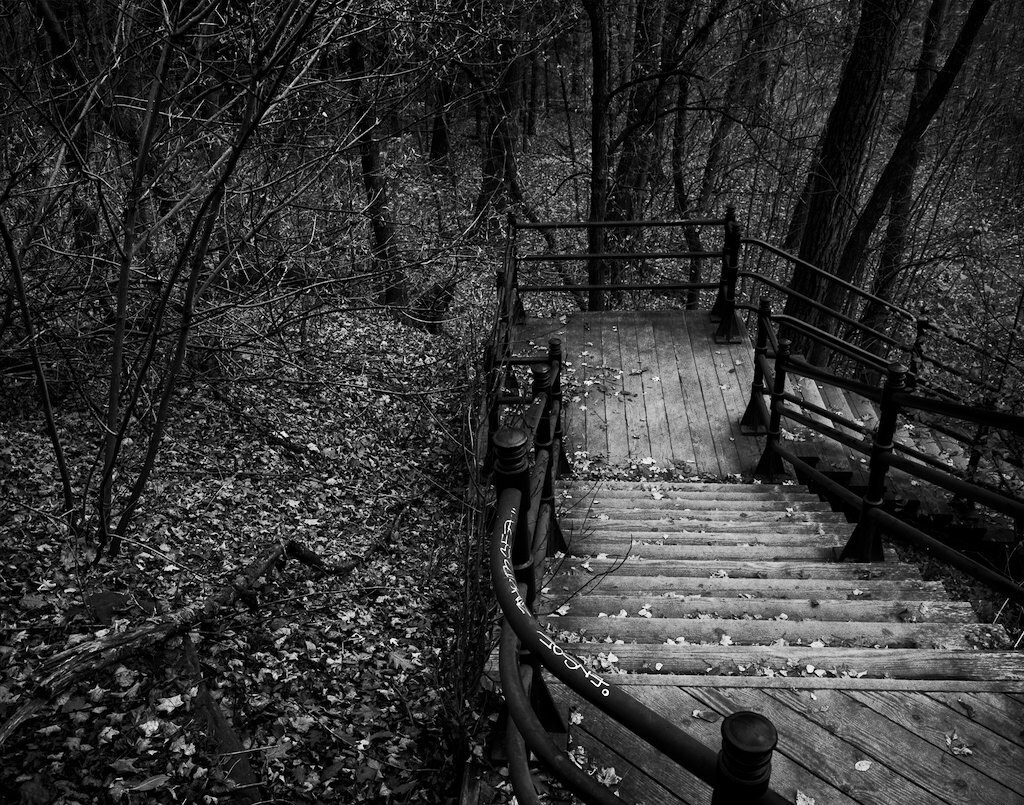
This is a photo from Mont Royal Park in Montréal, where much of the story from the first Werecat installment takes place.

This is a New York City bodega – another scene for a lot of the story’s action.

Actor Michael Fassbender, who certainly would be a great casting choice for the villainous character of Benoit.

Young actor Francois Arnaud would make a good choice for the main character Jacks.


Kal Penn, of “Harold and Kumar” fame, comes close to how I imagine the character of Farzan. Although Penn is Indian and Farzan is Persian. But I would need a somewhat comic and tightly-wound portrayal for Jacks’ earnest and conflicted love interest.