In Search of Retold Stories

I love writing retold stories.

It may seem like a cop-out to take a proven successful plot and characters, tweak them and call the story your own. But to me, if your story entertains, what’s the big deal?

You could probably make the case that all contemporary fiction is derived from ancient mythology, folktales, or parables–there are no original stories out there even though everyone sets out to be fresh and original. The advantage of a novel that is unapologetically re-imagined is there’s an immediate connection with a readership who liked the story the first time and are curious to check it out a second.

I just finished a phenomenal book: Douglas Clegg’s Mordred, Bastard Son, which is drawn from the King Arthur legend.
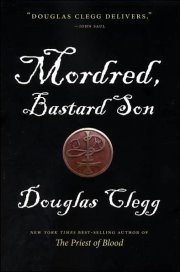
I had to reorient myself to the source material since my only recollection of Mordred was a snivelling, effete Roddy McDowell singing: “The Seven Deadly Virtues” in the musical Camelot. Creepy stuff. I may have come out years earlier if I hadn’t seen the show.

Luckily, Clegg’s Mordred is an entirely different guy. He was an entirely different guy in the earliest King Arthur legends, Clegg points out in his Foreword. Already I was hooked. We gays have always gotten a bad rap.

Clegg’s Mordred is a misunderstood young man condemned to a life of hiding by his father’s hideous transgressions. Arthur raped Mordred’s mother and stole the sword Excalibur from its sacred place with The Lady of the Lake. A nice thread in the story is Mordred’s finding his place in the world as a gay man. Pre-Medieval Brittanica is not particularly homophobic–it’s still a land of pagan sensibilities–but there aren’t many boys like Mordred while he’s growing up. He’s lonely, curious and frustrated by his attraction to boys he meets that he can never have. Then his mentor Merlin hands him an impossible challenge: he must remain physically pure until he reaches manhood (at approximately 18) or he will lose his potential to master the magickal arts.

The rich development of Mordred is what makes the book so enjoyable and engrossing. He’s a well-intentioned kid constantly thwarted by the people who are supposed to love and protect him.

There’s a love story with the Knight Lancelot who’s the most freely re-imagined character from the conventional tale. Clegg’s Lancelot is the best friend of Mordred’s

father, and he helped Arthur steal Excalibur and try to kill Mordred’s pregnant mother so his bastard son wouldn’t be revealed. When Mordred meets him, Lancelot is estranged from Arthur, living as an outcast, steeped in guilt and desirous of a male companion.

Here Clegg almost lost me. I’ve always thought of Lancelot as the epitome of male heterosexuality. But as I settled in to the latter half of the book, the romance between Mordred and Lancelot was awfully compelling. Lines like: “You’re my hunter, and I’m your stag.” probably make other people cringe, but set things up right and I’ll swoon right in my seat on the train.

Clegg also writes one of the best depictions of magic (magick) I’ve read. It’s inspired from nature–the elementals–and has more in common with native religion than the wand-brandishing wizardry of Harry Potter or the archaic incantations of Lord of the Rings.

The only thing that disappointed was the projected sequels to the book appear to have disappeared unless Clegg and/or his editors are taking their sweet time (it’s been four years since Mordred came out).

Gregory Maguire is of course my favorite author of retold stories. Beyond his humor and his capturing of otherness, he’s a master of setting–the dark but quirky land of Oz, early Renaissance Amsterdam in Confessions of an Ugly Stepsister, and the Italian countryside of the 16th century Borgia family in which he places his re-imagined Snow White in Mirror, Mirror.

So anyone have suggestions for reimagined legends while I wait for Gregory Maguire’s next novel to come out (and perhaps, in vain, for a sequel to Mordred)?

Meanwhile, I’ll be going dark next week while on va-cay in Provincetown.  Wishing good times for all this late summer.
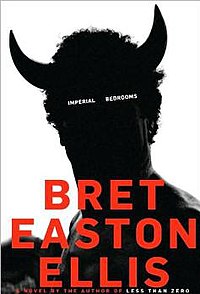
What Happens When Disaffected Youth Grow Up?

I read Less Than Zero my senior year of high school.  Growing up in suburban Buffalo, NY, I knew about drugs, casual sex and absentee parents.  The parties and dive bars my friends and I went to had none of the glamour of Beverly Hills, but we claimed the book as the anthem of our generation—the surrender to materialism, the wizened disconnect from the world, the futility of caring.

When the movie came out, we took our jabs at it.  Andrew McCarthy injecting niceness into Clay?  (And what happened to his bisexuality?)  Jamie Gertz as Blair?  She came off as dumb instead of disaffected.  And Less Than Zero was not a love story!!  There wasn’t supposed to be redemption at the end.  Still I re-watched the movie every time it was on cable.  At least the stylized cinematography and the soundtrack translated.

Now, 25 years later, the sequel Imperial Bedrooms comes out.  I was immediately intrigued by the real- time lapse between the books.  I’d grown up since Less Than Zero.  Ellis had grown up.  How had his characters grown up?

More on that question in a sec.  The quick synopsis:   Clay, now a successful Hollywood screenwriter, returns to LA for the production of a film and is drawn to a beautiful but middling young actress and, soon enough, a ton of trouble.

So, what happens to a group of disaffected, morally ambivalent youth 25 years later?

According to Ellis, not much.  Julian has somehow survived heroin addiction and netherworld pimps though he’s still pissing people off and owing them money.  Blair is married to Trent, the guy in Less Than Zero who introduces his friends to snuff films, and she’s still mired in the soulless culture of the LA elite, now set squarely within the film industry.  Clay is still drifting through life anesthetized.  The drugs have changed—alcohol and Xanax have replaced cocaine and heroin—but the results are  the same.  The sexual relationships remain ambiguous.

In Less Than Zero, you could say Clay was feeling his way out of a postapocalyptic world of interpersonal exploitation.  In Imperial Bedrooms, the transactions have become ingrained in Clay.  He’s too psychologically detached to recognize it, but he’s as much a predator as any of the people around him.

This subtle shift had pluses and minuses for me.  In fact, I vacillated on how I felt about it every other page.  One on hand, Clay’s pathological narcissism is raw and gripping.  He thinks and does increasingly awful things.  Reading the book is like being an acrophobic strapped to a high speed roller coaster.   I felt stuck on his ride until the end.

But I stopped caring about Clay early on, and halfway through I was so desperate for empathy, I started pulling for everyone who stood against him.  I was rooting for the actress who was using him to get a part in his movie.  I was rooting for Julian, who sets Clay up in a really despicable way, but at least the guy had cleaned up his life a little.  I was even rooting for Rip who hires thugs to torture and murder people.  Anyone who would give Clay his comeuppance.

So maybe that was Easton’s point—to push the boundaries of Clay’s relatability, to ask the question:  what really matters?   The existentialism works well on an atmospheric level.  In several parts of the story, I was wondering—is this actually happening or is it all in Clay’s head?  Though I think Ellis did a better job with ambiguity/suspense in Lunar Park.

I think the problem is that as readers we’ve grown up.  We’ve answered most of our angsty questions, found some meaning in our lives, and a book about a guy who’s lost and remains lost, no matter how elegantly told, just isn’t as interesting as it used to be.

To take it further, there are more angsty questions now that we’re approaching 40 or over 40, but another problem is Imperial Bedrooms doesn’t have anything to say about these issues.  Clay’s not having a midlife crisis, he’s having a personality disorder.  You wouldn’t know he’d aged since LTZ except for a few references to a failed relationship a few years back.  Characters talk about his screenwriting credits, but it’s hard to believe he ever had the ability to write a script.

It pains me to criticize Bret Easton Ellis since I’ve picked up every book he’s written as soon as it came out.  I’d judge Imperial Bedrooms as his least successful novel, but for fans, it still has moments of brilliant lyricism and the disorienting anomie we’ve come to love.  Less Than Zero was tough to follow up.  Most of us thought that all of the characters would be dead by now.

Angel Fiction Wars: Anne Rice vs. Danielle Trussoni

Some months back, I read Anne Rice’s Angel Time and posted my impressions here.  I just finished Danielle Trussoni’s Angelology, so it’s time to throw the literary gauntlet down.

A quick synopsis of Trussoni’s book:  The story is about Evangeline, a young nun/librarian, who is pulled into the secret world of Angelology by a seemingly routine request.  A scholar Verlaine, hired by a mysterious, ailing man, wants information about a correspondence between her convent’s founding abbess and the philanthropist Abigail Rockefeller.   Quickly, Evangeline’s quiet and secluded world unravels.  The two women’s archived letters point to a conspiracy to protect Evangeline from a brood of fallen angels (the Nephilim) and a hidden society of angel “scientists” determined to release mankind from Nephilim oppression.

While Rice and Trussoni take inspiration from Catholic angel lore, the contrasts between their books could hardly be greater.  Rice’s angels are beneficent otherworldly souls; Trussoni’s are re-imagined creatures, some led astray by their lust for mortal women (The Watchers), and their hybrid offspring (the Nephilim) are as status-hungry as the 18th century French aristocracy.

Rice treads the themes of lost love and redemption.  Trussoni’s story is essentially a young woman’s coming of age against a backdrop battle of good versus evil.  Stylistically, Rice writes lush prose infused with startling emotion.  Trussoni is a story-weaver who threads biblical, art history and ancient mythological intrigue at a pace that draws comparisons to Dan Brown’s The DaVinci Code.

Another contrast is the two books’ reception in the market.  Angelology wins out big in terms of press reviews.  Angel Time received measured praise but actually edges out Angelology according to readers (at least based on Amazon reviews).

Rice delivers an elegant, tragic tale that starts out slow but draws you in with a great sense of character and place.  Trussoni gives you an awesome page turner that stumbles a bit in the middle, picks up steam again, and then the ending, ugh the ending (no spoilers here, but you can check out what readers have to say at Amazon).  Trussoni sets the bar high with an amazingly researched, complex premise so I give her points for that.

When the people speak (per Amazon), Angelology gets 3 stars and Angel Time gets 3 and 1/2.  I think that’s about right, and I’m the first one to be surprised by recommending an atmospheric, slow-burner over a gripping, layered mystery.  But they’re both good reads, and I’ll entertain all protests on Angelology’s behalf.

On the Gay-o-Meter, it’s no contest; Angel Time wins hands down.  Angelology’s Verlaine is a self-proclaimed Metrosexual, and if you squint real hard you could possibly imagine him as a sexy guy.  But Angel Time has dark, brooding hitman Toby O’Dare who plays the lute, and the portrayal is totally believable.  I’m afraid you just can’t beat that.

Two Plugs and a Whoop Whoop

Busy time here with work-weeks extending into the weekend and house guests on the way.  So I just wanted to jot off a couple of plugs.

First, I encourage folks to check out Eric Mays’ Author Speaks series that got started earlier this month and will have interviews with Jordan Krall, Bill Fitzhugh, Anne Rice (yes, the Anne Rice) and yours truly (later this summer).

Next, Ganymede #7 is out with a fantastic assortment of poetry, new fiction and reprints of historical homoerotic literature.  I especially enjoyed the final installment of Scott Hess’ Bergdoff Boys, which is sort of a gay Sex in the City (if that’s not redundant) with interwoven themes of recovery, gay identity and gay marriage.  Short fiction by 20th century British author Denton Welch stood out as well.  His story “When I was Thirteen” is gay coming of age that goes from sweet and charming to horrific when a boy’s fascination with an older teen is discovered by his older brother.  Since this is National Poetry Month, I should mention some of the really amazing poets:  Saeed Jones, Ocean Vuong,  and Ivar Sild, among many fine contributors.

And now a “Whoop! Whoop!” (for no reason in particular).

The Post-est with the Most-est

All that title means is that I’m feeling a bit silly tonight.  Maybe because posting here buys me a break from the big re-drafting of my novel, a process I started about a week ago.  I wrote a new opening scene that I’m pretty happy with, but it’s hard people, hard!

In the meantime, I continue reading.  I recently finished Anne Rice’s ANGEL TIME, and I’ll share my impressions here.

A brief synopsis:  ANGEL TIME is the story of a hitman named Toby O’Dare who is visited by an angel and given a chance to redeem himself by traveling back to 13th century England to save a community of persecuted Jews.

My previous attempts to read Anne Rice were aborted after the first twenty or so pages.  Having gotten through ANGEL TIME from cover to cover, I’m feeling more positively disposed to Ms. Rice.  I think she’s at her best when she’s “telling” versus “showing.”  She writes long, introspective passages that at times achieve brilliance.   Against her LeStat series, ANGEL TIME is a comparatively slim volume, which is perhaps why I didn’t have as hard a time with it.

But on the whole, I could’ve done with less exposition and less of Toby O’Dare’s constant contemplation.  The first half of the book is almost entirely backstory – a compelling backstory for sure, but rendered at a pace that left me anxious for some action.  The second half, which deals with Toby’s mission to save a Jewish family falsely accused of murdering their daughter (a common circumstance during the Christian fanaticism of 13th century Europe), moves along with much more suspense and intrigue.   The story rings true, the characters come to life, and it makes for enjoyable historical fiction.

I do have a new appreciation for Anne Rice’s unique sensibility, which appeals to so many gay men.  Her toughened hitman Toby plays the lute!  I thought that was pretty damn cool.  Plus Toby cries, both in sorrow and happiness, through something like 25 percent of the story, and he has a deep emotional connection to his angel savior Malchiah.  One could imagine that something more than loving reverence could develop between the two (maybe it’s forthcoming in the series’ next installment).  Anyway, as a reader, I felt that somewhere in ANGEL TIME’s tragic, supernatural world, there was a place for me, and that’s big props to the author and quite unexpected.

It’s hard to evaluate ANGEL TIME without dealing with Anne Rice’s strident religiosity.  She has publicly and self-righteously announced that she has given up writing about vampires and witches in order to devote her literary projects to Jesus.  As such her portrayal of angels is literal, with few surprises, and gets a bit “message-y” for us non-Christian readers.  Let me qualify that.  I don’t mind novels with a message, but I veer away from stories where the message is accept Jesus as your lord and savior or perish in eternal hell.  There’s some of that familiar refrain in ANGEL TIME.  But the story also speaks to the possibility of redemption even for those who have done “unforgivable” things, an intriguing concept that I think resonates beyond the Christian community.