Good and Bad LGBT portrayals

I’ve been participating in a discussion board on the topic of what makes an LGBT portrayal good or bad.

The question was posed by an LGBT writer and got several of us sharing our favorite characters.  But the discussion soon drew in non-LGBT writers who were worried about their own depictions and not wanting to offend.

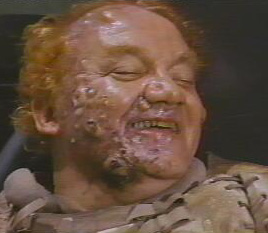
There’s a history of villainizing gay men in lit, playing to a conscious or subconscious fear of effeminacy and our “strange” proclivities.   Likely, this trend was a lot more prevalent prior to the civil rights movement.   Think about the many fey villains in Ian Fleming’s James Bond series, their apathy toward women the perfect foil to Bond’s rather active heterosexuality.   Or—from Frank Herbert’s Dune—the gluttonous, deranged Baron Vladimir Harkonnen who can barely keep a handle on his lust for his young nephews.
Another popular trope is sometimes called ‘Bury your Gays.’    How many LGBT’s in mainstream novels make it to the end of the story alive?   (especially if they are non-gender conforming and/or open about their sexuality?).   Somehow, gay tragic heroes bother me more than gay villains.    Jack Twist in Annie Proulx’s Brokeback Mountain, for example.   Practically all the “classics” have LGBT’s killing themselves or at least ending off badly:   James Baldwin’s Giovanni’s Room, Radclyffe Hall’s The Well of Loneliness, D.H. Lawrence’s The Fox, among others.

Representations have certainly gotten better, but if you believe in the concept of a collective unconscious—as I do—archetypes never really die, they go through derivations, softening perhaps, but persisting as something we believe to be true about the world.

I notice this is some of the historical fiction I read:   Turnus, the petulant prince-suitor who is mocked for his homosexual-leanings, in Ursula LeGuin’s Lavinia.   Ay, the ruthless puppet-master behind ancient Egypt’s dynastic political workings, in Nick Drake’s Nefertiti.  (He’s mentioned to be gay for no apparent reason other than to set him apart as the only gay character in the novel).

In some recent stories, LGBT villains have become less evil and more absurd.   I haven’t seen the movie, but there’s quite a fracas over the glam rock-inspired bad guy in the new Tron:   Legacy.   You can check the discussion out on AfterElton.

I know I’m veering away from literary examples (which elude me now), but there’s Dr. Evil from Mike Myers’ Austin Powers’ films and scores of queeny villains in TV’s South Park and you bet you’ll find at least a couple ridiculous or tragic (or ridiculous AND tragic) LGBT’s in any Wayans Brothers film.

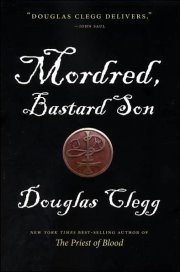
I don’t think any of these depictions are horrible or bent on destroying the LGBT community (some of them are clever and funny), but I do think they’re worth examining.   And the best kind of LGBT portrayal—in my mind—is one that turns the tropes on their heads, re-imagining what we think we know.    Can a gay teen save the world, as in Perry Moore’s Hero?   Have the lives of our folktale villains been suppressed and misunderstood, as in Douglas Clegg’s Mordred, Bastard Son?   This is the stuff I want to read.

Charles Busch’s The Divine Sister

Previously books and movie reivews, this week Broadway.

It’s been a little while since my partner and I went to a show, last spring actually, to see the silly, contagious ode to 80’s headbanging Rock of Ages.  Charles Busch’s The Divine Sister is equally tongue-in-cheek in tone but a lot more clever and satisfying.

Busch has a cult following.   His theater and film projects haven’t made it to the marquee’s of Times Square or the strip mall multiplexes (with the exception of his Tale of the Allergist’s Wife). But his admirers will follow him wherever he goes from Off Broadway to the community theaters across the country.

He works in the medium of 50’s/60’s screen diva reincarnation: Die, Mommy, Die! (Bette Davis), Psycho Beach Party (Joan Crawford), which perhaps has a limited audience, but for those of us who could imagine few pleasures greater than snuggling in for the night to watch All About Eve, he delivers big time.   There’s absurdity galore, and emoting doesn’t begin to describe Busch’s stage performance, but I wouldn’t classify his portrayals as send-up or parody.   As ridiculous and vulgar as things can get—his sexually voracious Angela Arden in Die, Mommy, Die comes to mind—he manages to walk that difficult line between caricature and misogyny. He is, after all, a gay man in make-up and a dress who loves the campy female characters he recreates. The send-up is in the subversion of the sunnied, homogenized family-friendliness of 50’s and 60’s screen hits.

In The Divine Sister, Busch plays Mother Superior at St. Veronica’s, a convent on the skids. The buildings are falling apart, there’s no money to rebuild the community, a visiting German nun is up to something nefarious late at night, and young Sister Agnes–a derivation from the movie Agnes of God–is having miraculous, and likely, fictitious visions that have attracted the interest of a Hollywood screenwriter.

It’s hard for Busch to stand out amidst the phenomenal comic cast. Julie Halston is the hard edged Sister Acacius who is steadily unraveling from a guilty conscience. Alison Fraser channels Marlene Dietrich cum Frau Blucher as Sister Walburga, and Jennifer Van Dyck is a snooty heiress prone to lapse into absurd, meandering reminiscences.   Busch’s deference to his co-stars is a triumph.  Everyone has their “moment,” and you find yourself rooting for everyone no matter what their bizarre motives.

Best of all is how the actors play off each other with perfect comic timing. A string of double entendre insults delivered to Sister Acacius (too dirty to repeat here) was a highlight. Good for full-body laughter.

2010 Releases – Hollywood Hits and Misses

So this is a highly-skewed list of raves and roasts from a cranky movie-goer who has perhaps become a bit self-righteous about proper storytelling. I counted sixteen 2010 releases that I’ve seen so far this year, nearly all commercial films, I just haven’t had the time to keep up with the indies. Here are my three favorite and my three least favorite.

The Best

An excellent, clever family drama, the gist of which is two teens raised by a lesbian couple seek out their biological dad—a sperm donor—and discover something important amidst the chaos that ensues. No cheap sentimentality. The mothers aren’t perfect, and the bio dad is a particularly well drawn out guy who is at turns despicable and sympathetic.

The Social Network doesn’t qualify as an original story per se, but the filmmakers did something with a real life narrative that I really liked: letting the action speak for itself. There isn’t any fluffy “humanizing” of the characters, no clunky musical cues to tell the audience how it should feel. If you want to excavate the humanity of Mark Zuckerburg and his too-smart-and-too-rich-for-their-own-good college cohorts, you’re going to have to pick up a mental shovel yourself. Exactly what I think a good story should do.

On to lighter fare, the film adaption of Jeff Kinney’s middle-grade series was the funniest movie I’ve seen all year. The premise: a late-blooming, world-embattled 12 year old enters middle school and goes on a quixotic mission to achieve popularity. It’s high school movie stock and trade, but setting the story in the horror show of middle school opens up new, cringing possibilities.

The Worst

The 80’s film had woeful special effects, dully-imagined mythological characters and epically corny dialgoue. But like a Saturday morning cartoon, it was innocuous and oddly nostalgic.  It also told a coherent story.

The 2010 update had decent special effects but recast Perseus as a Jesus figure caught between Zeus (God) and Hades (The Devil). A waste of a spectacular ancient world setting. And way too earnest. Even Sam Worthington’s hotness couldn’t save the film.

Speaking of overly earnest, this “comedy” in which a junior record producer and a washed up rock star looking for a come-back discover what’s important in life through their unlikely friendship really disappointed. The film had more missed beats than a cardiac arrest.

In order for a story to work, it has to be believable or in the case of sci fi/ fantasy maintain a sense of internal logic.  So, in the future everyone needs organ transplants why?   No one can afford them but they’re getting them anyway, why?   They’ve figured out a way to create synthetic organs, but to control the deadbeats who are late with their monthly payments, they created a special repo force to brutally reclaim the organs instead of flipping a switch to deactivate them?  Ugh.

What’cha reading?

I set out this year to read more books, and—with the extra leisure time I have taking the train to work—I’ve been pretty successful. I’m on my 23rd book of 2010.   With two months left, I figure I should finish 25 or 26 by the end of the year.

A little early, I thought I’d share my favorite literary discoveries of 2010. These aren’t all necessarily the very favorite books I’ve read this year, but they are each recommendable and—I found—unique in some terrific way.   None of them are 2010 releases since more often than not, I’m playing catch up on books that are somewhat comparable to my own writing.

I can’t say enough good things about Clegg’s retelling of the King Arthur legend. In fact, I’m repeating myself from an August 18th post on retold fairy tales and legends. In brief, this fantastic novel takes place in the richly imagined Medieval world of Broceliande, a bit reminiscent of Gregory Maguire’s Wicked, and tells the story of young Mordred’s coming of age under the tutelage of the magickal Merlin. If you enjoy stories that subvert villains and heroes (Arthur gets quite a send-up), you couldn’t do much better.

I liked Mordred so much, I wrote to Douglas Clegg to tell him, and I received a nice reply with the sad news that his planned trilogy was thwarted due to issues with the publisher Alyson, despite the fact that the book sold well and got great reviews. I’m crossing my fingers that the other books get bought fast by a big publishing house.

Switching genres completely, I loved this quiet, friends-gathering-for-a-summer-weekend drama. Sort of Love, Valour, Compassion meets Ordinary People, it’s a study of the inner world of four people managing loss and damaged relationships.   The Weekend was my introduction to Cameron and left me mightily impressed.

The Ranger’s Apprentice hardly needs my testimonial. The franchise has been wildly successful across the globe and still fills up book displays at all the bookstore chains. But as a reader who is a trifle timid about high fantasy, it was an unusual pick for me and highly satisfying.

The Ranger's Apprentice by John Flanagan

Retrieved from Amazon

The Ranger’s Apprentice–dare I say–surpasses the Harry Potter series in its portrayal of a teen hero. I was surprised by the degree of character development actually since it is a “boy’s book” with swords, dark magic and fantasy creatures with impossible to pronounce names. In the midst of it, there are great plot lines about how boys succeed when they’re not the physical ideal and the frightening world of bullying victims.


Little did I know, there’s a mystery series set in Ancient Rome. Saylor’s Gordianus–The Finder–is the Ellery Queen of the ancient world. Historical authenticity is a big selling point for his Roma Sub Rosa series with The Finder navigating the real life dramas of such figures as Cicero, Marcus Crassus and Catilina. The Venus Throw is about the murder of an Egyptian diplomat amidst the Republic’s designs on the Egyptian kingdom and the demise of the wealthy Claudia family. A fun diversion.

Quiver by Stephanie Spinner

Retrieved from Amazon

This retelling of the ancient Greek Atalanta myth provides a nice portrayal of a non-gender conforming girl and moves along briskly with well written action. I would have liked a little something more unexpected in the “retelling,” and it’s hard to reconcile the fiercely independent Atalanta getting married in the end. But as one of very few Young Adult novels tackling Greek mythology—hmmm, not a bad idea—it’s fresh and worth the read.

Telling Them Anything You Want: Maurice Sendak

I recently and randomly caught the HBO documentary: “Tell Them Anything You Want: A Portrait of Maurice Sendak.” Sendak was my favorite author as a child. There’s a dreamlike and—at times—a nightmarish quality to his books, and it wasn’t until I saw the movie adaptation of “Where the Wild Things Are” that I truly understood the profoundness of his work.

Many children’s book authors succeed in channeling the wonder and imagination of childhood. Sendak does that and goes beyond, tapping into the childhood emotional experience—those dark moments of feeling lost and vulnerable. But the stories are surrounded by a sense of permission to have those feelings. The endings are not always happy in a traditional way, but the heroes stand strong amidst their hardships even if they cry during the journey.

The Sendak documentary does much to illuminate his sensibility. It came out last year before the Wild Things release and was filmed by directors Spike Jonze and Lance Bangs in 2003 when Sendak was 75. The documentary is a continuous conversation between Sendak and the directors at the author’s Connecticut home. Sendak has a caustic wit, tending to be self-deprecating in spite of his idol status.

What stood out was the permanence of his childhood imprints—the Lindbergh baby kidnapping and the accidental death of one of his playmates in Brooklyn. He admits to having morbid obsessions, an existential gloom, and you get the impression that he wishes he had a chance to live his childhood over again. And that his stories and illustrations are a method of re-experiencing, repairing what was lost to him.

My sixth grade teacher gave us the assignment to write a letter to our favorite author. I chose Sendak while over half the class chose Charles Schultz, even though the teacher warned us that Schultz never responds to fan mail. I remember my excitement when I got the response. It was just a postcard, hand-typed, thanking me for my letter and telling me about his three dogs all named after ancient Greek heroes. I remember Agamemnon and Io but I can’t recall the third. The postcard was tacked up on the bulletin board of my bedroom until I went away to college.

In the documentary, Sendak talks about how much he loves his dog (a new dog Herman). He also talks lovingly about his best friend Lynn and his longtime partner Eugene (who died in 2008). He seems a solitary figure, but this has become his family.

I think what resonated the most was Sendak’s emotional honesty. He has regrets, greedy ambitions, and he remains frightened by his gayness. That honesty is poured into his work. The documentary title “Tell Them Anything You Want” comes from his response to a question about children’s authors’ responsibility to their audience.   His longer answer is kids can handle tough subjects when they’re handled with honesty and kindness.