On Writers Critique Groups

A friend and I are organizing a critique group for queer writers. It’s one of the reasons my blog output has been woefully sporadic. We’re off to an exciting start with twenty-five members and max capacity of twelve for our first meeting, March 1st.

In preparation, I’ve been soaking up all the wisdom I can. There are a number of how-to books on running critique groups. Luckily for cheapos like me, there are lots of articles on-line for free.

So I gathered the general points below based on a few guidelines I found and liked on on-line forums, as well as my personal experience as a member of a critique group and as a beta reader.  I also threw in some general ideas about leading groups of any kind based on my practice and training as a social worker.

1. Orient members to the group by setting forth the purpose of the group and the format, rules and expectations.

That sounds particularly social work-y, and maybe dull and unnecessary. But I’ll give an example of how things can go awry.

I participated in a crit group that was looking for new members. We all agreed on having a laid-back screening process, something like posing a question beforehand: “tell us a little about your writing.” We decided to give the first guy who responded to our on-line posting a try.

He was excited to get feedback on the first section of his novel, and the group leader invited him to do so. We all read the piece and gave him thoughtful criticism when he showed up for his first meeting. Then, he sent an e-mail around, after the group, saying he really wouldn’t have time to participate in meetings because he needed to focus on his writing. Ugh. So why did we all waste time reading and trying to help him with his novel?

I’m sure this dumb stuff can happen in the best of circumstances, but I use it as an example of the importance of orienting members. If it had been clear to him from the start: joining the group is a commitment of X, Y, Z, he might have opted out, since really all he wanted was a quick focus group on part of his novel.

This brings up a sub-guideline: help potential members evaluate how the group fits into their lives. Is it realistic for them to read and critique 10, 20, or 50 pages in a one-week or two-week period? Do they have enough time to write so that they can submit their own work regularly?

2. Get agreement on etiquette for critiquing.

I briefly participated in the SF/F writers community Critters, and I love their guidelines (they call them “Diplomacy Requirements”) because they get into the nuances of delivering critique effectively. I’ll highlight/paraphrase just a few:

Say it’s your opinion. Use “I” statements: I’m finding this character’s actions hard to follow, vs.: This character makes no sense and will confuse readers.

Don’t try to persuade. A peer critique group is about peers giving each other advice. While it’s important to give your opinion when asked, it’s also important to be mindful of the fact you really don’t know better than any other writer. What you have to offer is a different perspective.

Another thing to consider is the balance of positive and negative feedback.

I once received a typed critique of a novel excerpt that had two short paragraphs about things the reader liked, and three pages of forceful criticism. Rationally or not, the only thing that stuck with me was the reader really, really didn’t like the story, leading me to another conclusion (rationally or not): she thinks I’m a crappy writer, leading me to shut down to anything she had to say (rationally or not).

Another point comes up from this example: taking in criticism non-defensively, which I could tackle in a separate article.  For now, I feel it  demonstrates the dangers of focusing too much on the negative. If you read a piece and have thirty-three problems to point out, try prioritizing them and share your top four or five. Less is more.

When I give critique, I try to keep the positive/negative ratio to 1:1. Some guidelines suggest 3:1. I have a hard time doing that because it takes me more words to describe why I think something isn’t working vs. why I think something is working.

Those positives are really essential though. In order for a group to be successful, there has to be a sense of hope, and commonality. Members should feel that their peers believe in their skill and promise as a writer and that they genuinely like reading their work. One article I found on “Daily Writing Tips” suggests that you open and close your critique with positive feedback.

3. Use the group to generate productivity.

Despite the admonitions of our childhood, peer pressure can be a very positive thing. In a writers group, it encourages members to make time for their writing, push themselves, and stick to commitments. You don’t have to be a Nazi about it, but a good upfront goal is for people to write more through their participation in the group.

I’m sure there are a whole lot more great tips, but that’s all I’ve got for now. What else has helped critique groups be successful for you?

Wrestling out of the Squeeze


Embedly Powered

So this is what it feels like now that the Spring semester has started.

And why I haven’t posted anything for a couple of weeks.

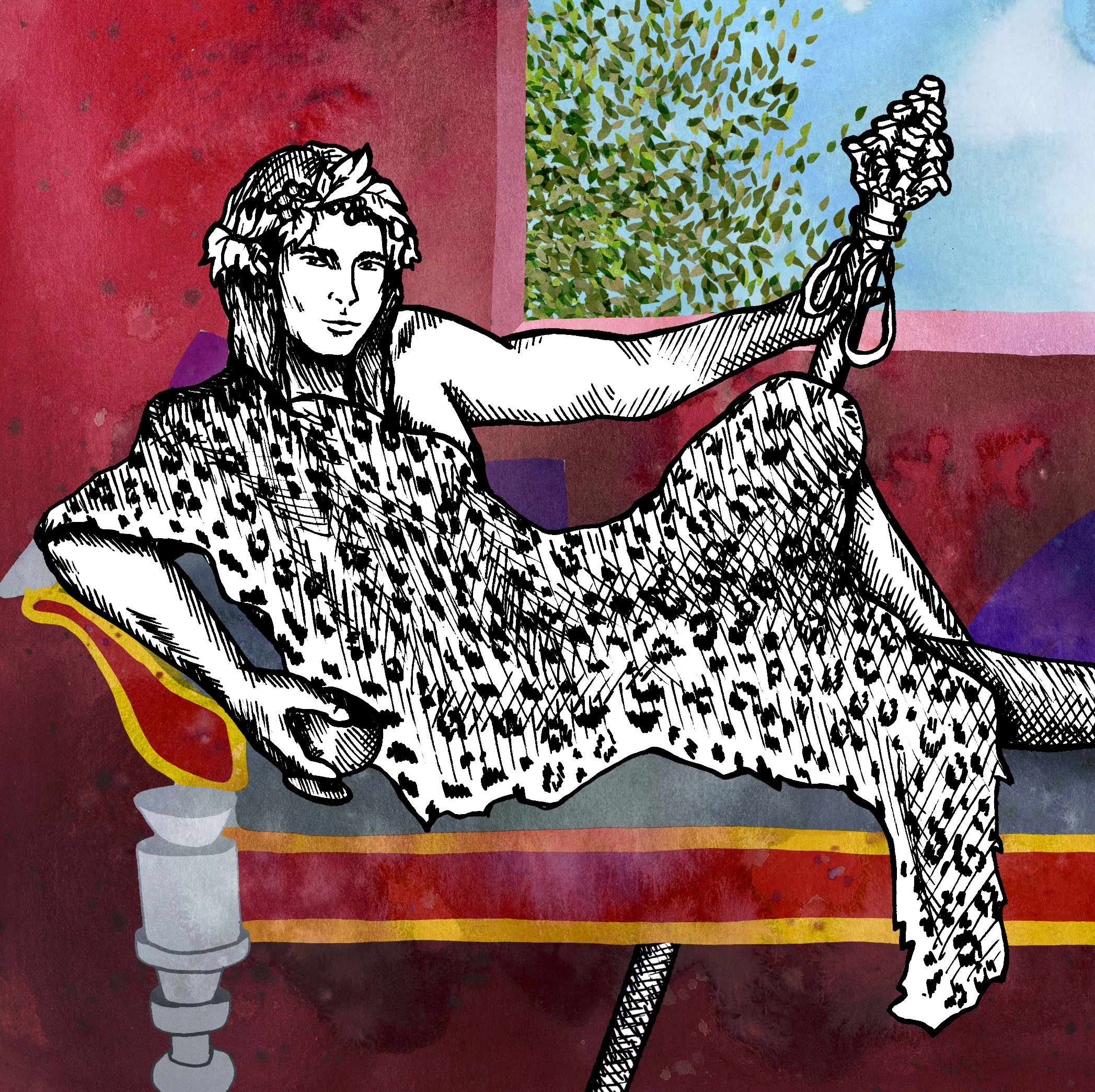
In the meantime, some cool things have happened.  Through my series of posts on mythological characters, I connected with an up-and-coming British artist Rhea Babla. We got to talking about Dionysius, and she did this illustration.

I love the colors, and the mix of styles.  It almost scans to me like superimposed images.

So, besides balancing two jobs, I’ve been working on POSEIDON AND CLEITO here and there, and me and a friend of mine, the fabulous writer C.A. Clemmings, started organizing a critique group for LGBT fiction writers.

We’re looking for folks in the NYC area who can give and receive critique, support each other’s projects, and commit to critiquing 10-40 pages every two weeks and submitting their own work at least once every six weeks.

If you’re enthusiastic about LGBT fiction and it sounds like something you’d be into, drop me a line.

Happy Groundhog Day!

Fan mail!

Amidst the onslaught of spam I receive — shady pharmaceutical ads and celebrity sex tapes — I discovered this real gem, which counts as my first certifiable hate mail.

21 October, 2011 is the last year for LGBT pride to survive on earth
I won’t support or Anti-LGBT, but the world start crazy, disaster, economic crisis & self-destroy each day, no matter of how charity you try to make it. Just wanna remind you that being gay/Lesbian/Bisexual had been considered immortal and sinful cursed by all religious and all around the world by God & all his Kingdom of Heavens ex: Buddhist, Christ, Hindu, Islam etc. God may not prevent natural disasters, everything is subject to the fall of humanity into ‘sinful that effects on everything’s’ for ex: disasters, disease, resources limited, crisis & suffering as universe by against the laws of nature (Genesis 1:1). Revenge of God, Kingdom of Heavens & Mother of the Earth is ‘JUST STARTING’ God killed millions in the bible…..allowed almost every loss possible on this earth for ex: Job, Status, Sick, Deep grief, AIDS/HIV, Horrible, Loneliness, A Catastrophe Ballet. Hurting was to realize what’s coming, as ‘Sinners in the Hands of an Angry God’ and then sudden destruction cometh upon them…” Awake to righteousness

Signed –

siwanuan

The manic tenor was indeed intriguing, as well as Siwanuan’s certainty that October 21st is THE BIG DAY he (she?) has been waiting for — the complete obliteration of LGBT pride.

(It was sent on the morning of October 21st, and well, we rainbow flag-waving infidels are still kicking it.  Sorry Siwanun).

The guy/gal submitted the comment on my guestbook, and I briefly considered approving it and adding him to my mailing list.  Nah.  I’d only be inviting more barely literate, fanatic rants, of which there’s too many in the world, as in the frightening panel of Republican presidential candidates spouting off every other day.

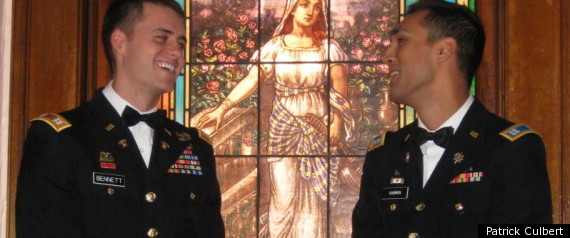
But just to share a recent heartwarming helping of LGBT pride, I was enchanted by Huffington Post’s recent story about military officers and gay couple Adam Harmon and Pete Bennett.

I consider myself pretty anti-militaristic, but I have to admit, there’s something about queers in the armed forces that makes my heart go pitter-patter.  And it’s just a really interesting story — how two men found love within the intensely homophobic confines of the U.S. marines.

If you’re going to make a living promoting American imperialism, the least you can do is subvert the heterosexual norm.  May Adam and Pete live happily ever after.

Short Story Publication News, and Other Stuff

Gotta say, I’ve had a patch of good stuff happening lately.  From my videotaped reading coming out earlier this week to getting an acceptance from Wilde Oats for my short story Mike’s Pond, I’m feeling pretty proud of meself, and lucky.

Wilde Oats Issue Nine will include my short, fictionalized memoir Mike’s Pond about growing up in suburban Western New York.  The issue comes out in December, and I’ll be sure to do a major blast on the release.

I also have a guest blog up today about working with LGBT teens in the suburbs.  It was a great opportunity offered to me by author/blogger Brandon Shire.  Brandon recently published The Value of Rain, a novel about a gay teen who gets sent to an institution to turn him straight.  He’s donating half of his book sales to LGBT youth agencies, and he was kind enough to do a plug for Pride for Youth, where I work.

I’m still following Yes Gay Ya, and working on an article about diversifying young adult literature.  Since Rachel Manija Brown and Sherwood Smith put out their testimonial on censorship, Colleen Lindsay leant her platform The Swivet to Joanna Stampfel-Volpe of Nancy Coffey Literary Agency to tell a different side of the story.

Stampfel-Volpe writes that the authors leaked the name of the agent they accuse (from Nancy Coffey); the agent never offered representation on the condition of cutting out a gay character or making him straight; and the Genreville article is a mean-spirited publicity stunt.

Only a fly on the wall knows the truth.

But out of the kerfuffle, there’s an opportunity to look critically at the status of LGBT YA, and how we can get more and better representation of LGBTs in literature.  That’s what I’m writing about.  Deep stuff.

Birthday reflections

I’ve never worked on my Birthday.  The idea is inherently repellent to me. Maybe I’ve been spoiled, growing up in a family that always took vacation during the last week of August.   But I’m breaking the tradition this year.  Truthfully, I did a little frontloading to get this post out on a Wednesday, which happens to be my 42nd birthday.

It makes me reflect on my writing career, which could be characterized (generously) as a slow-burner.  I got my first academic publication before I turned 30.  At that time, I set a goal to have three times that many, and maybe a book out before I turned 40.

Not to be. I managed to get a series of academic pubs, mostly in my early 30s.  Teetering toward the edge of thirtysomething, I got my first fiction break.  The late John Stahle gave me a chance by publishing my retold fairytale The Vain Prince.

I could qualify things by pointing out that I’ve worked a demanding full-time job for the past 17 years.   In fact, through most of my post grad life, I’ve taken part-time work on top of that.  But there’s two sides to the coin. I’d love to have lots more time to write, and I think I’d be more productive and faster if I didn’t need a full-time job to sustain myself.  But there’s also the wise adage: if you want a job done well, give it to someone busy.

I think about my writing in the same way that I think about my coming out at times.  What if I had started younger?  Think of all the amazing experiences I would have had…all the wasted years.  But regret doesn’t stick with me as much these days.  Things happen for a reason.  It’s not a religious sentiment (perish the thought), it’s more like being practical.

Every experience I had shaped my life as a writer, and as a queer man. I could only do what I did at the time with what I had at the time.  Besides, the Japanese just proved that time travel isn’t possible. No going back and switching majors in college or swaggering around campus as a self-empowered queer.

So, my goal for this decade is to write as much as I can, to build my readership, and to try not to take myself too seriously.  I find that last one gets easier with age.   I don’t mean not taking my writing seriously, or not setting ambitious goals.   Ambitious goals are good.   I mean being open to the knowledge that’s out there beyond my inner world.

Socrates put it this way:  the more I learn, the less I know.

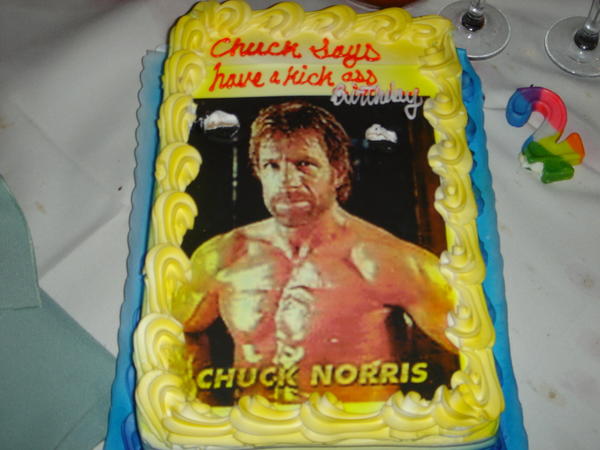
The photo isn’t my Birthday cake.  It’s just a stock image I found and thought was funny.  Who wouldn’t want a Chuck Norris Birthday cake?