Check out Dispatches from Hogwarts G.S.A. at Queer Sci Fi

I’m really excited to announce that I started writing a monthly column for Queer Sci Fi and Fantasy. It’s called Dispatches from Hogwarts G.S.A. and will feature commentary, perspectives, and an occasional book review related to queer fantasy, including and beyond young adult books.

I’ve written over the years for various sites, discussing literature, LGBT politics and culture, and my journey as a writer. This column is my first firm commitment to write about that stuff regularly. Yes, I’m having heart palpitations about taking on that responsibility. But I’m also grateful and happy for the opportunity.

The first dispatch went live today, and you can read it here.

Support the first-ever Queens Book Festival

New York City has been a longtime hub for writers, publishers, and literary events. Though when people think New York City, they tend to think Manhattan over any of the so-called outer boroughs. This despite the fact that most New Yorkers, and most writers, live in those outer boroughs, including Queens. Queens has the distinction of being the most culturally diverse borough in the entire city, and it’s the home of many of New York City’s artists and writers.

Queens has never held a book festival to celebrate its local authors and artists, and I would say an inaugural event is long overdue. I’ve been a resident of Queens since 2001, and I was happy to discover its burgeoning literary community, which includes a literary journal, a number of reading series and some great independent bookstores and coffeehouses.

Folks from that community have come together to launch the first-ever Queens Book Festival, and we need your support to make it happen. The Festival has a Kickstarter campaign with a big menu of fantastic sponsorship packages, at all donation levels. Every dollar helps!

I included their Kickstarter video below, and you can check out the donation page here.


Queens Book Festival Kickstarter Video

Queens Book Festival Kickstarter Campaign Video 1

What’s it like to be a queer teen in rural Minnesota?

morris area gsa

Morris area GSA logo from their Facebook page

A little while back, I saw a post in the YA LGBT Books discussion group on Goodreads, asking folks to donate books to a fledgling Gay/Straight Alliance (GSA) in Morris, Minnesota.

I pretty much instantly responded. In addition to my passion for LGBT YA, I spent eighteen years as a social worker for LGBT youth in suburban Long Island. This goes back a few decades (I share with a bit of 40-something humility) and to a time when there were zero GSAs in existence in the community.

I remember when the first high school GSA was launched amid a great deal of trepidation and some sensationalism. Many schools my organization dealt with had the attitude: “Well, that’s fine for that district, but it could never happen here.” I’ll reign in my reminiscences so I can get to the main point of my post. Suffice it to say, there were a lot of battle stories, and it was tremendously gratifying to witness schools turning a corner in the new millennium and now GSAs being the norm in Long Island rather than the peculiarity.

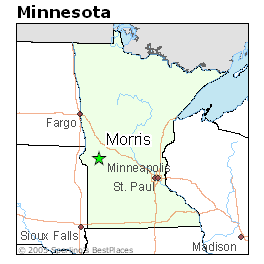
Map from Sperling's Best Places to Live

Map from Sperling’s Best Places to Live

I had to Google Morris, Minnesota. I learned it’s a small city in the western part of the state, surrounded by dairy farms, and home to a great state university. It’s a long way from Minneapolis-St. Paul, and I gathered that growing up LGBT in Morris is a far cry from the experience of urban and suburban teens. At least in Long Island, teenagers were aware of, and in some cases could participate in the adjacent, diversified New York City LGBT community. There were ‘out’ politicians, the Harvey Milk High School–the first LGBT high school in the country, and a huge annual Pride Parade. Rural areas tend to be more socially, politically and religiously conservative, so I imagined that the need for support in Morris was huge.

I sent the GSA advisor copies of my two YA titles, and a few days later I got back a thank you note from one of the students in the group. It was one of the most kind and thoughtful notes I’ve ever received. I asked the student if I could share it on my website, not to brag about my donation, but because she articulates so well the importance of LGBT YA to teenagers. I understand that the GSA has received over 40 titles as a result of the Goodreads announcement, and they welcome more. After the letter, I’ll include links to the thread where you can see how to help with the campaign, which I hope you will.


Dear Andrew J. Peters,

I am writing as the representative for the Morris Area GSA, a fledgling GSA, which has been sponsored by our school board for less than a year. This letter is being written as an expression of deep gratitude for donating books containing queer characters.

As you probably already know, today’s media is barren of representation for queer peoples, especially where gender is concerned. In many of today’s fictional novels targeted for young adults, the story features a straight, cisgender couple. If there is [sic] are queer characters, they are commonly shoved off as a side character, and a painful stereotype; a white, gay male who is flamboyant and obsessed with fashion, beauty, etc. To read a book containing any queer characters, there is a specific genre (usually titled “Gay and Lesbian”), and the stories tend to [sic] dramatic misinterpretations of what it means to be a queer person; not to mention, most queer characters are simply “gay,” with few characters exploring concepts such as bisexual, and almost no books with a transgender/otherwise genderqueer character.

I, as a young queer person, frequently found myself feeling invalidated growing up. The age when you are learning who you are is a very impressionable time. My early developmental years were spent in an area where “queer” was never even a topic. The lack of representation of queer people is detrimental to queer children. I felt as if I was wrong because I didn’t fit in with what society expected of me. Some people who have never experienced this may say the lack of affirmation of who they are does not bother them. The truth is, many queer people try to force themselves to fit into roles they were assigned rather than let themselves be who they truly are simply because they never were taught it was okay.

That’s why what you’re doing is so wonderful. Our GSA is filled with young, queer people who struggle with their own identities, whether because of people within their own life, or they are just trying to figure out who they are. These books provide comforting, realistic characters whom we can relate to and even learn with. The inclusion of queer characters is a refreshing change of pace and a fantastic feeling of validation for those of us who never feel that way otherwise. It’s one of the best feelings to know that who you are is okay, and I thank you. Truly.

Sincerely,
Teresa Boyd

Secretary of the Morris Area GSA
And Morris Area GSA members

Thank you, Teresa for bravely making the GSA possible so that other queer students have a place to gather safely and support each other.

If you would like to get involved, check out the thread from YA LGBT Books on Goodreads. My thanks to Kaje Harper for letting me know about the cause!

Read an excerpt from Banished Sons of Poseidon

This is my third excerpt feature this year. Keeping a New Year’s resolution all the way through May is pretty good, huh? I chose to share a passage from my most recent release Banished Sons of Poseidon, which is the story of a disgraced, novice priest who must find a way to lead the survivors of Atlantis home.

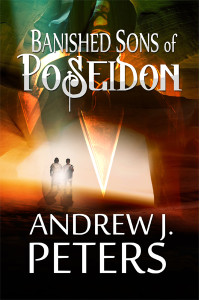
Banished Sons of Poseidon cover

Banished Sons of Poseidon is a follow up to The Seventh Pleiade, and a question I get a lot is: “Should I read the first book first?” My impartial answer is maybe. While my publisher and I worked on plugging the release of the second book, many readers who hadn’t read The Seventh Pleiade picked up the book and posted reviews. Few mentioned they had trouble with the plot or wished they had read the first book first. I’m really happy we pulled the manuscript together in a way that makes it work as a standalone.

Naturally, some people will still prefer to start at the beginning of the story, which is something I usually do. Though there are so many fantasy series out there, I have to admit that I have sometimes picked up a second or third book in a series by mistake and not been disappointed.

I recently read the below excerpt at The Rainbow Book Fair, and introduced it as a preview of what I feel is the heart of the story. Amid sixteen-year-old Dam’s big adventure in an underground world where the survivors of Atlantis take shelter, he’s also contending with baggage from the past, in the form of a falling out with his only blood relative Aerander, who was the hero in The Seventh Pleiade. But Banished Sons of Poseidon is Dam’s story. He’s an orphaned son from a minor noble family, who was raised in the grandeur of a house governor’s palace. He and his cousin Aerander were inseparable until Dam parted ways to make his own way in the world.

Just a little more set-up from the scene: it takes place in the hours before the survivors are to attend their first celebration with an ancient race of men who have given them shelter underground. Dam was invited to attend with an underground warrior and is rushing to get ready.

~~~

Entering his house, he spotted Aerander in the middle of the room. His cousin had fixed his hair in sculpted waves with some sort of concoction and put on a fancy chiton that draped from one shoulder down to the middle of his calf in the style of a statesman. It was spun from elegant silk, and its seamstress had embroidered hems across the top, the single sleeve and around the bottom in the indigo hatch mark pattern of the House of Atlas. With a shadow of a beard growing in, Aerander was looking more like his father by the day. The only thing missing was a gilded lariat for his head.

“Naturally, you’re the last one to get ready,” Aerander said.

“I overslept.”

“You wouldn’t have that problem if you got to bed at a normal time.”

“What happened to your hair?”

That left Dam’s cousin chuffed for a moment. His hair didn’t actually look bad, but saying it made a mischievous little ember inside Dam glow.

“It’s a special oil they get from fish,” Aerander said. “But it doesn’t smell. See?” He bowed his head, inviting Dam to take a sniff.

“No thank you.”

“A lot of the boys are using it. I brought some for you.”

Dam stepped past him to pick out some clothes. He needed a dry pair of trousers and a clean shirt.

“I brought you an outfit, too.”

Dam followed Aerander’s gaze to his bed. There was a chiton laid out there. It was the same style Aerander was wearing. All the highborn boys must have requested noble clothes for the occasion. He was supposed to wear a chiton to the feast while his friends were going in plain shifts and trousers?

“There’ll be two head tables,” Aerander said. “One for Ysalane and her people, and one for us.”

Dam skirted his glance. He felt like a cold shadow had descended on him from above.

“Go on,” Aerander said, glancing at the bed. “We have to get over to the hall.”

“I made plans for the feast.”

Aerander twitched his nose, and then he grinned as though Dam was putting him on. Of course, Dam wasn’t. “What do you mean?”

“Hanhau asked me to go with him as his guest.”

“Hanhau?”

Dam nodded.

“I thought—” Aerander started to say. He grimaced. “It’s a public occasion, Dam. People are supposed to sit with their family.”

“You’ll have Lys and Dardy and Evandros.” Dardy and Evandros were Aerander’s best friends. They were from House Gadir. But they were all so close, they called each other brothers.

“They’re friends. Not family.” Aerander said.

“It’s just a dinner. We’ll all be in the same room.”

“It’s not just a dinner. It’s diplomatic. You knew that, and you made plans without even talking to me about it.”

“It only came up last night.”

“How could you do that to me?”

Dam winced. He pushed on. “Hanhau asked me to go with him, and I told him would. Because I want to.”

“Because you want to. Did it ever occur to you that I need you at the feast? I’m representing everyone. Is it too much to ask that my only flesh and blood could sit beside me?”

Dam looked at his cousin helplessly. Ever since they had been reunited by the disaster, they were like lost pups who rediscovered each other in the wild. Aerander pushed too hard, and Dam nipped and clawed back. He needed time to go back to the way they had been with one another.

Aerander’s face was flushed and trembling. Dam stepped near. “I’ll be there to support you. Does it matter that we’re at the same table?” He reached to clasp his cousin’s shoulder. Aerander jerked away from him.

“What did I do to you to make you treat me like such a shit?”

Cold irons sank into Dam’s chest.

“Why can’t we be brothers, the way we used to be?”

Aerander had lost his birth mother when he was a baby, just like Dam had lost both his parents. They had been raised together by nursemaids in the Governor’s palace. They had both been taken into a household where they didn’t belong, which made them feel like they belonged to each other even more.

“When the flood came, and I couldn’t save my family, all I wanted to do was bury myself in my bed and die,” Aerander said. His eyes were watery and haunted. “You pulled me out of that. You told me that people needed me to give them something to believe in. You said we would stand together. Just like I took your side when everyone thought you double-crossed Leo and Koz, I might need your help someday.”

Dam stared at Aerander, frozen. “It’s only a feast.”

“Is everyone right about you?” Aerander said. “You lie and steal, and you only care about yourself?”

“Aerander, don’t.”

He eyed his cousin steadily. If Aerander wanted to have a conversation about the past, they could start with Aerander’s family brushing Dam aside like a domestic to clear a gleaming path for their one and only rightful legacy. Maybe Aerander couldn’t have done anything to intervene, but at least he could admit that it was House Atlas that had abandoned Dam, not Dam abandoning them.

Aerander drew a breath, and his diplomatic airs came back to him, albeit strained. “Do what you want,” he said. “There’ll be a seat at the table if you change your mind.”

He glanced at the chiton on Dam’s bed, and then he stepped out of the room.

~~~

If you liked what you read, you can pick up the book at my publisher’s online bookstore, Indiebound (to find an independent bookseller near you), Amazon, iTunes, Barnes & Noble, Kobo, or anywhere else you like to buy books. 🙂

Hop for Visibility, Awareness, and Equality

Hop for Visibility, Awareness, and Equality

Updated to add on 5/25/2016: Thanks so much to everyone who hopped over! My contest is closed, and the winner selected by Random.org is Lee! Congratulations, and I’ll be in touch shortly to arrange for your prize!

I’m proud to be participating in the Hop for Visibility, Awareness, and Equality (formerly the Hop Against Homophobia and Transphobia), which is an annual action by folks in the publishing industry that supports the International Day against Homophobia and Transphobia (#IDAHO) on May 17th.

This is my third year being part of the Hop. Here’s how it works: Read my brief post, drop a comment below with your e-mail address, and you’ll be entered in a raffle for your choice of any e-book from my backlist (Werecat #1-3, The Seventh Pleiade, or Banished Sons of Poseidon).

IDAHO brings awareness to injustice around the globe, and as a gay man and an LGBT activist living in the United States, I’ve always felt privileged in relation to the millions of LGBTs living in countries where being LGBT is persecuted and criminalized.

The status of LGBTs in the United States is complicated to unpackage, but the fact that many of us live openly, with rights supported by statutes and growing social acceptance, places us heads above the vast majority of LGBTs around the world.

Improving conditions for LGBTs in Africa, the Middle East, Russia, Asia, and parts of Central and South America must be a top priority for all us of. I chose to write about the situation here in the U.S. because I believe that countries ‘leading the way’ have a responsibility to take inventory of themselves in order to better lend resources to our friends around the world.

I remember the mixture of happiness, admiration and touch of disbelief I felt when I first saw these t-shirts come out in 2012, following the U.S. Supreme Court decision that all states must extend the right to marry to same-sex couples.

Geeks Out Achievement Unlocked T-Shirt

T-shirt created by Geeks Out

It was definitely an appropriate time to celebrate and ‘flaunt’ our hard-won success. Over the past year or so, those t-shirts have reminded me how fragile progress is.

We’re facing a new wave of anti-LGBT political action, exemplified most recently and visibly by North Carolina’s regressive law blocking local anti-discrimination ordinances. It’s hardly an isolated attack on LGBTs. State legislatures across the country are working to maintain second class status for us via “religious freedom” laws, sparked in part by anti-LGBT celebrity Kim Davis who in 2014 made headlines for refusing to issue marriage licenses to same-sex couples in Kentucky.

Mississippi, Georgia, Tennessee and other states have introduced legislation to exempt businesses from non-discriminatory employment practices and even providing services to LGBTs. The media often focuses on the absurd ramifications of the law, such as bakeries that refuse to make wedding cakes for gay and lesbian couples, and pizzerias that turn away LGBT patrons. I don’t think those are the kind of situations that have the most impact on LGBTs in our daily lives. Lots of other implications will. Keeping with #IDAHO’s 2016 theme “Mental Health and Wellness,” a better example of the scary impact is health and mental health providers refusing services to LGBT people based on “moral” objections.

If this sounds like a huge step backward for social justice, and quality of life, I think you’re absolutely right. If it sounds like the familiar organizing ploy of Republican fear and hate-mongering to mobilize their evangelical Christian base for the upcoming elections, I think you’re absolutely right as well. We’ve lived through the proliferation of Defense of Marriage Acts (DOMA) in the 90s and 2000s. Before that, we dealt with the military’s “Don’t Ask, Don’t Tell” policy, and state initiatives to prohibit gay/lesbian couples from raising children.

Like today, those efforts tended to be a reaction to LGBT advances (a backlash), and tended to coincide with attacks on other vulnerable minorities such as immigrants, as well as women’s reproductive freedom.

Social justice advocacy can feel unending. Once we’ve made progress on one front, a new threat emerges to remind us that we must be vigilant to protect the gains we’ve achieved. I do believe, by and large, the United States continues to move in the right direction, but we cannot be complacent. I remember a dialogue in the media following the Supreme Court decision with some people questioning whether or not the LGBT civil rights movement had become obsolete given its successes.

I think we can all look back on that conversation from a wizened perspective. Beyond the regressive backlash that must be fought, we have a long way to go in realizing fairness and dignity for transgender people; and clearly the climate for American LGBTs varies greatly depending on where we live, as exemplified by the recent British travel advisory for gay travelers to southern states in the U.S.

What do you think? Drop a comment below and I’ll enter you into my drawing for your choice of any e-book from my backlist, to be announced on May 25th 12:00 AM EST. I also encourage you to check out this list of Hop participants below and hop around to grab more chances to win lots of other prizes.