It’s #PoseidonWeek at andrewjpeterswrites.com!


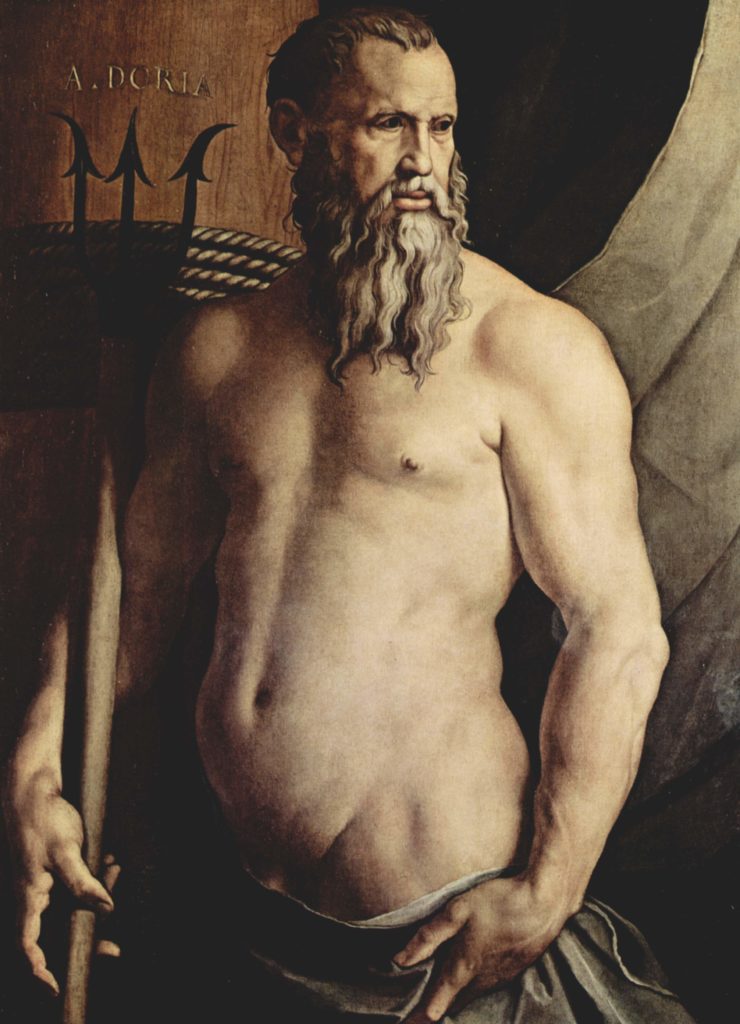
Portrait of Andrea Doria as Neptune by Angelo Bronzino. Retrieved from Wikipedia Commons.

Portrait of Andrea Doria as Neptune by Angelo Bronzino. Retrieved from Wikipedia Commons.

It’s Poseidon Week here at andrewjpeterswrites.com! From Monday, August 29th to Thursday, September 1st, I’ll be posting stories, images, and interesting facts about the famous trident-wielder to celebrate the August 29th release of Poseidon and Cleito exclusively on Amazon. You’ll also find excerpts and some extras from the book. And I’m running a contest. Drop a comment, like, or share any post on my website, or my Facebook page, and you’ll be entered into a raffle for Poseidon swag provided by Zazzle. Winners will be chosen Thursday, September 1st 9:00PM EST.

So what is it you could win? Your very own Poseidon t-shirt, Poseidon mug, or Poseidon notebook. Winners will need to provide their e-mail address and mailing address for shipping.

For today’s post, I thought I’d share some of my thoughts about Poseidon and some lesser known stories about him. Poseidon was never my very favorite personage from Greek mythology. Growing up, I was more drawn to the heroic tales of Jason, Perseus, and Theseus. When I came out as gay, I found new favorites in the stories of Zeus and Ganymede, and Apollo and Hyacinth. But there was always something sympathetic for me about gloomy, aloof Poseidon.

He strikes me as a lonely guy, perhaps misunderstood, lashing out at mortals from some inner torment, whether borne from being overshadowed by his older brother Zeus or something else that was never elaborated on. Most of the Greek gods could be said to be moody and capricious in their sorting out of mortal matters, but it seemed particularly tough to get on

Poseidon’s good side. Being a natural skeptic, I’ve wondered if that was a fair portrayal.
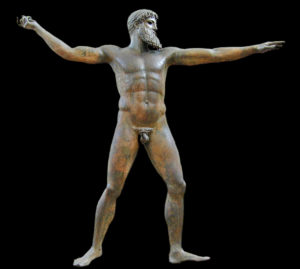
Artemision Poseidon

“Artemision Zeus or Poseidon,” a famous 5th century BCE bronze statue at the Athens Museum of Archeology

An interesting thing about Greek mythology is that it changed throughout the eras, and most of what endured, what we recognize today, is from the classical era when Zeus and Athena were prominent and beloved. Some scholars believe that the worship of Poseidon was more widespread in earlier time periods and that his significance extended beyond an association with sea and storm. To people of an earlier age, he was probably a beneficent god of an earthly realm, worshiped for fertility and good harvests. Another matter is that the similarity in Poseidon and Zeus iconography makes it hard to determine which god was most popular among the Greeks, or whether they were both offshoots of a father god archetype.

Poseidon remained an important figure in religious practice and folklore throughout and beyond the classical period (and of course, many centuries forward via the Romans co-opting him as Neptune). But for the most part, he was portrayed as fearsome and villainous in the stories from the classical era. In Homer’s Odyssey, for example, Poseidon is an antagonist to the hero Odysseus, preventing the Trojan war hero from returning home to Ithaca in retribution for blinding his son Cyclops. Plato’s story about Poseidon’s kingdom Atlantis in his Critias and Timaeus dialogues has the patron god’s country destroyed by a morally and–one would have to argue–supernaturally superior Zeus.
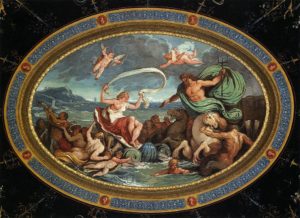
The Marriage of Poseidon and Cleito

“The Marriage of Poseidon and Amphitrite” by Italian painter Felice Giani (image retrieved from Wikipedia Commons)

Poseidon and Cleito is a retelling of that legend, including the perspective of the woman Plato named as Poseidon’s wife. A more well-known wife of Poseidon’s from folkore is Amphitrite, who was a Nereid (a daughter of the archaic sea god Nereus), and a sea-goddess herself. Of more notoriety, Poseidon was said to have seduced or even raped the beautiful maiden Medusa in his sister Athena’s temple, which angered Athena so much, she transformed Medusa’s hair to serpents. The Greeks had little charity for women in their myths.

A point of contrast with Zeus: while his older brother was the father of some of the most popular heroes from Greek mythology (Perseus, Heracles), Poseidon was the father of some of the most well-known monsters, such as Polyphemos, also known as the Cyclops, and Charybdis, the female whirlpool monster, of the famous Scylla and Charybdis, aka “the rock and a hard place.”

One last bit of trivia, Poseidon had male lovers too. One particularly interesting story is that of Nerites, who was the handsome brother of the beautiful Nereids (sea nymphs). Both Aphrodite and Poseidon fell in love with Nerites, and the young man refused the love goddess and chose Poseidon, who made him his charioteer.

Let me know what you think about Poseidon by dropping a comment below, and I’ll enter you in the raffle for Poseidon swag!
 

A YA panel on fantasy, multicultural perspectives, and information for teens

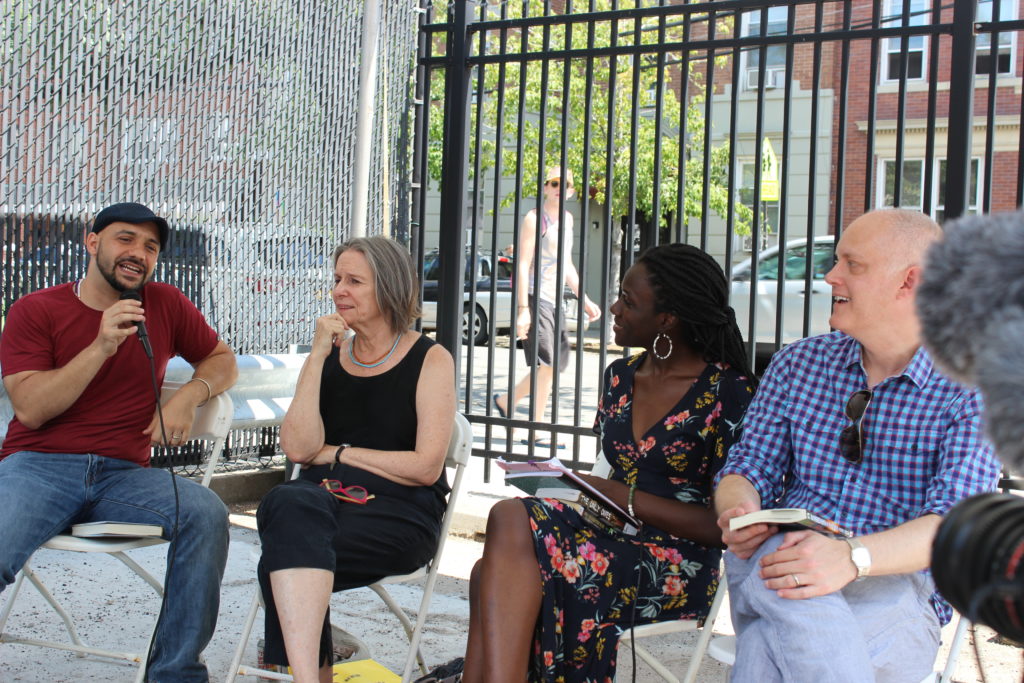
YA Panel at the Rainbow Book Fair

On the Queens Book Festival Young Adult Stage, from l to r: Daniel José Older, Carola Dibbell, Dominque Taylor, and me

Last Sunday’s panel: “Expanding the Landscape of Fantasy and YA Imagination,” was a really nice event. It was hot and shade was at a premium at Kaufman Astoria Studios outdoor space, but folks of all ages turned out for a lively discussion about challenges and opportunities in the realm of young adult fantasy.

The panel included Daniel José Older who writes stories from Latino perspectives (Shadowshaper, Bone Street Rumba), Carola Dibbell, whose début novel The Only Ones portrays teen motherhood and economic class in a near future, dystopian world, and me. We were moderated by vlogger Dominique Taylor, founder of The Storyscape, who had us talk about our works, read from them, and comment on how marginalized voices and cultures fit into fantasy worlds.

I spoke about the need for LGBT experiences to be reflected in YA fantasy, and some of the themes that emerged from our discussion were how personal experience and culture informs our work, the importance of sharing information with young readers, and the problem of withholding information on critical topics like sexuality.

The panel was videotaped for The Storyscape, and I’ll be sure to share it when it goes live.

Many thanks to Sherese Francis, Johanne Civil and all the volunteers at the Queens Book Festival who made the event happen. And thanks to Dominique for hosting a great discussion.


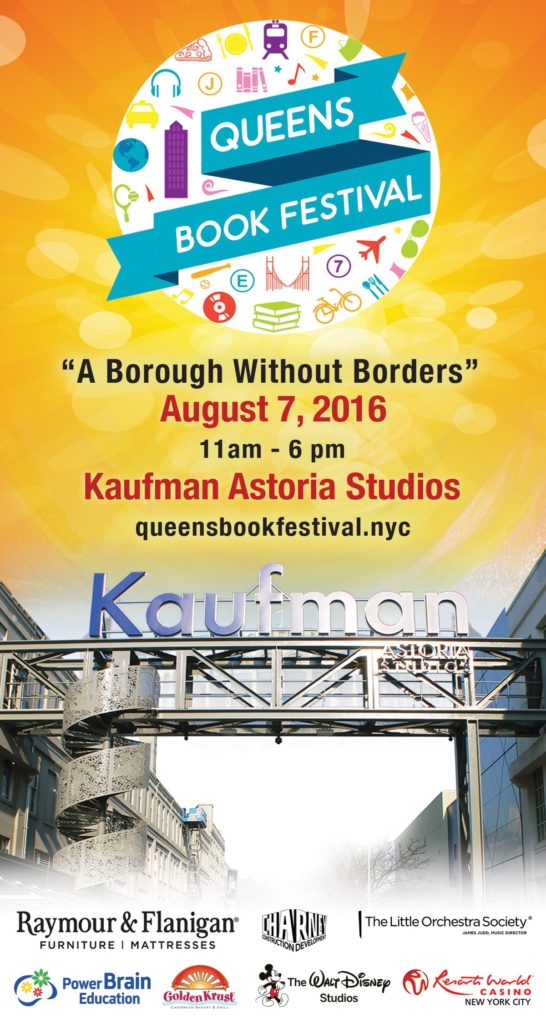
Join me at the Queens Book Festival YA Stage!

New Flyer

If you’re in the New York City area this weekend, why not come out to the inaugural Queens Book Festival on Sunday, August 7th at Kaufman Astoria Studios?

It’s a totally free event that is being called: “the largest and most inclusive literary gathering in the ‘World’s Borough’ of Queens.” There will be talks and exhibits by over 100 authors, many, like myself with local ties. The festival will also have a focus on activities for children and teenagers, and I’m quite excited to be part of the Young Adult Stage.

At 12pm, I’ll be on a panel titled: “Expanding the Landscape of Fantasy and YA Imagination.” Here’s the description:

For a genre like Fantasy that includes fairies, witches, werewolves, aliens, and supernatural powers, the inclusion of the diverse worlds of humans is surprisingly lacking. How are the boundaries being pushed in YA Fantasy to be more inclusive and challenging? What is considered “inappropriate” works for young adults?

The other panelists include Carola Dibbell (The Only Ones) and Daniel Jose Older (Salsa Nocturna), and the panel is moderated by book vlogger Dominique Taylor (The Storyscape). I’ll also have signed copies of Banished Sons of Poseidon for purchase.

Sound like a good time? I hope so. 🙂

For directions and the full program, check out the Queens Book Festival website here.


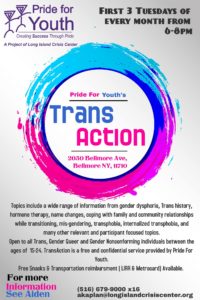
Trans-action: A visit to a transgender youth group

transaction

One of my favorite things to do as an author is speaking to young people about writing and LGBT lit. I wrote about my first gig ‘on the road’ at the Gay/Straight Alliance at Amherst High School, where I graduated many moons ago. More recently, I was invited to talk to the Trans-action group at Pride for Youth, which is an LGBT organization that I worked at for many years.

My visit brought up a similar sense of nostalgia. I hadn’t been back to Pride for Youth since 2012 when I made the tough decision to move on to a job in academia. For several years before that, I had been a bit removed from working directly with teenagers as I was in the role of managing government contracts and doing legislative advocacy and fundraising. Stepping into Pride for Youth untangled memories from earlier in my career when I ran groups for teens and worked at the drop-in center. I had sometimes used writing exercises as a method of self-expression, sharing similar experiences, and having fun.

Trans-action is a group for transgender, gender queer, and gender non-conforming young adults between 15 and 24 years of age. The group leader Aidan Kaplan had briefed me that group members come from towns throughout Long Island, and on any given week, anywhere from five to fifteen young people turn up for the group to share personal challenges, support each other, and get educated about physical and emotional health and activism.

When I first started working with kids in the 1990s, I was happily surprised by how many were interested in writing, particularly poetry. Of course, I’ve always loved writing, but in my day, and in my conservative hometown, you generally kept that a secret, and certainly boys didn’t write poetry.

It took me by surprise again meeting the Trans-action kids and discovering how many of them were avid writers. Some wrote poetry and lyrics. Some wrote more about their personal experiences. A few copped to participating in fan fiction forums, which I told them isn’t anything to be ashamed of. Both Cassandra Clare and E.L. James had roots in fanfic, and I shared with them that my earliest writing was imitative of the authors I enjoyed at the time. Still, it became a topic that we joked about.

1280px-Transgender_Pride_flag.svg

This is the Transgender Pride flag, which was introduced in 2000 at a pride parade in Phoenix, Arizona.

I told them about my journey as a writer, which is entwined with my journey as a gay man, and to an extent with my journey as an LGBT rights advocate. Then we talked about what they liked to read and why, and why they liked to write. I also talked about transgender, bisexual, lesbian and gay fiction being a social justice issue, and not unexpectedly, that was a topic many of them already had opinions about. Besides Jazz Jennings’ Being Jazz, most were not aware of any books about transgender teens, and certainly not any fiction. We had a discussion about the problem of growing up without any positive representations of transgender people, and I shared some books suggestions such as Cris Beam’s I am Jay and Alex Gino’s George.

I then led a short writing exercise. My lead-in to it took me right back to my days as a social worker with teens. As soon as I explained they were to write a story incorporating three random elements, one young man groaned: “Oh yeah. We did this in 7th grade English class.” So much for wowing them with my sophistication.

Anyway, if you’d like to try the exercise: write a story that incorporates Saskatchewan, betrayal, and a box of Fruity Pebbles. The results were fantastic and ran the gamut from personal reflections on isolation to paranormal stories to humor pieces and beyond.

Although, as a mild indictment of the New York State public school system, not one of the kids knew where Saskatchewan was, or even what it was (sorry Canada). I got a big grin when a young man wrote about Saskatchewanians speaking French. 🙂

You can find out more about the excellent organization Pride for Youth here. They depend on donations, of any size, to keep up the lifesaving work they are doing.

And if you have a youth group you’d like me to come and talk to, drop me a line!


LGBT Portrayals in Historical Fiction

AchillesPatroclus

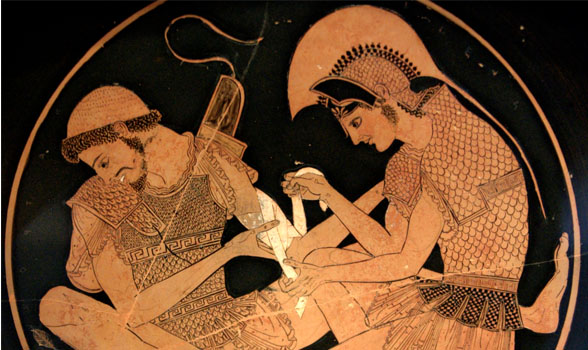
Just a quick, little media alert that my guest post on historical fiction in young adult literature went live today at LGBT YA Reviews.

LGBT YA Reviews is a Tmblr site run by British author Lauren James, including recommendations, reviews and viewpoints all from the world of LGBT YA lit. Thanks so much Lauren for the opportunity to share my article on your site!