“Crotchwatchers” finds a home

I’m thrilled to announce that my short story “Crotchwatchers” has found a home at Diverse Voices Quarterly, Vol. 3 Issue 11-12.

The issue went live today, and is available for download (free) here.

A word to the wary (or voyeuristic) – “Crotchwatchers” is not erotica.  It’s hardly graphic at all.  The title comes from one of the characters’ observations:

“The world is divided into two kinds of people:  people who check out a guy’s crotch when he walks by, and people who don’t.”

That gem of wisdom (paraphrased from an ex-boyfriend) was calling out to me to be parlayed into a story.  It turned into a coming-of-age piece that was influenced by my work with urban gay teens in the 1990’s, and my personal experience.

The setting — New York City’s Christopher Street Piers — was once an unlikely refuge for gay and transgender teenagers, some of them homeless, some of them looking for a place where they could be themselves, hang out with friends and people watch.  Gentrification had yet to come to the spare, concrete platforms jutting out into the Hudson River.

In the early 90’s, I was not much more than a teen myself, and my boyfriend and I would walk out to the end, holding hands, and watch the sun set, while the area filled up with a diverse crowd of ‘bangie boys,’ ‘butch queens,’ boys in drag, and ‘baby dykes.’

Around that time, I started working at an LGBT youth center.  A lot of the kids spent time on the Piers, particularly the lower income Black and Hispanic boys.  There were perils to the Piers.  Some kids got involved in street prostitution, and many complained about being harassed by the police.  Gradually, kids were displaced from the area due to Greenwich Village residents complaining about crime and vagrancy.  The riverfront area went through renovation to become a tidier urban park.

In part, “Crotchwatchers” is a tribute to a vibrant street phenomenon that sadly has no equal nowadays in New York City.  Groups of queer kids still hang out on Christopher Street, outside the bars and shops where they are either too young to enter or don’t have the money to spend anyway.  The neighborhood very well may be safer, but it’s lost some of its soul.

Short Story MIKE’S POND is Live

Cool news this week:  my short story MIKE’S POND is live on Wilde Oats Issue 9.

You can check it out here.

Odd story about how MIKE’S POND came to be.

It started as an experimental piece while I was participating in a writers critique group back in 2009.  We decided to all try writing horror stories for a change of pace, and it got me thinking about the stories that scared me as a child.

I have an older brother so the source material was considerable.  He used to tell me all kinds of frightening things about the world, bizarre suburban legends, in addition to disturbing “truths” of anatomy.  Did you know that, instead of blood, your butt is full of green juice?

We grew up in a suburb north of Buffalo, New York, where there were many plots of undeveloped, wooded land, tempting exploration grounds for pre-teen boys, especially in the summer when we were largely unattended by our working parents.  There was an overgrown place called ‘Shotgun,’ where supposedly a boy got killed by the father of a girl he got pregnant.  Then there was Mike’s Pond.

Without giving too much of the story away, since I’d really love people to read it, Mike’s Pond evoked the most imaginative tales from my youth.  It was an acre or two of swampy land between the buzzing thruway and our handsome suburban enclave, and it was cordoned off by a fence.

All the legends about the place are true.  Well, at least I heard them at some point.  The characters are fictionalized, and the narrator is more of an amalgamation of me at different points during my teenage years than me as a twelve-year old boy.  The story turned out to be more coming-of-age than horror.  I guess I can’t help myself.

Pleiade Mythology

Continuing with the world-building thread I started recently, I thought I’d talk astrology and mythology this week on the subject of the Seventh Pleiade, the titular character from my novel.

And it gives me the opportunity to use the word ‘titular.’

The Pleiades — also called the Seven Sisters — are a star cluster in the northeast part of the Taurus constellation.

They are visible to the naked eye in winter in the Northern Hemisphere, and summer in the Southern Hemisphere.  Because of their brightness, the Pleiades figured prominently in ancient world beliefs and persist in many cultures around the globe.

The Maori New Year celebrates the rising of the Pleiades in May and June.

The Japanese car company Subaru (meaning:  united) has a six star logo based on the Pleiade cluster.

Which brings up the legend of the lost seventh sister — I’ll return to that later.

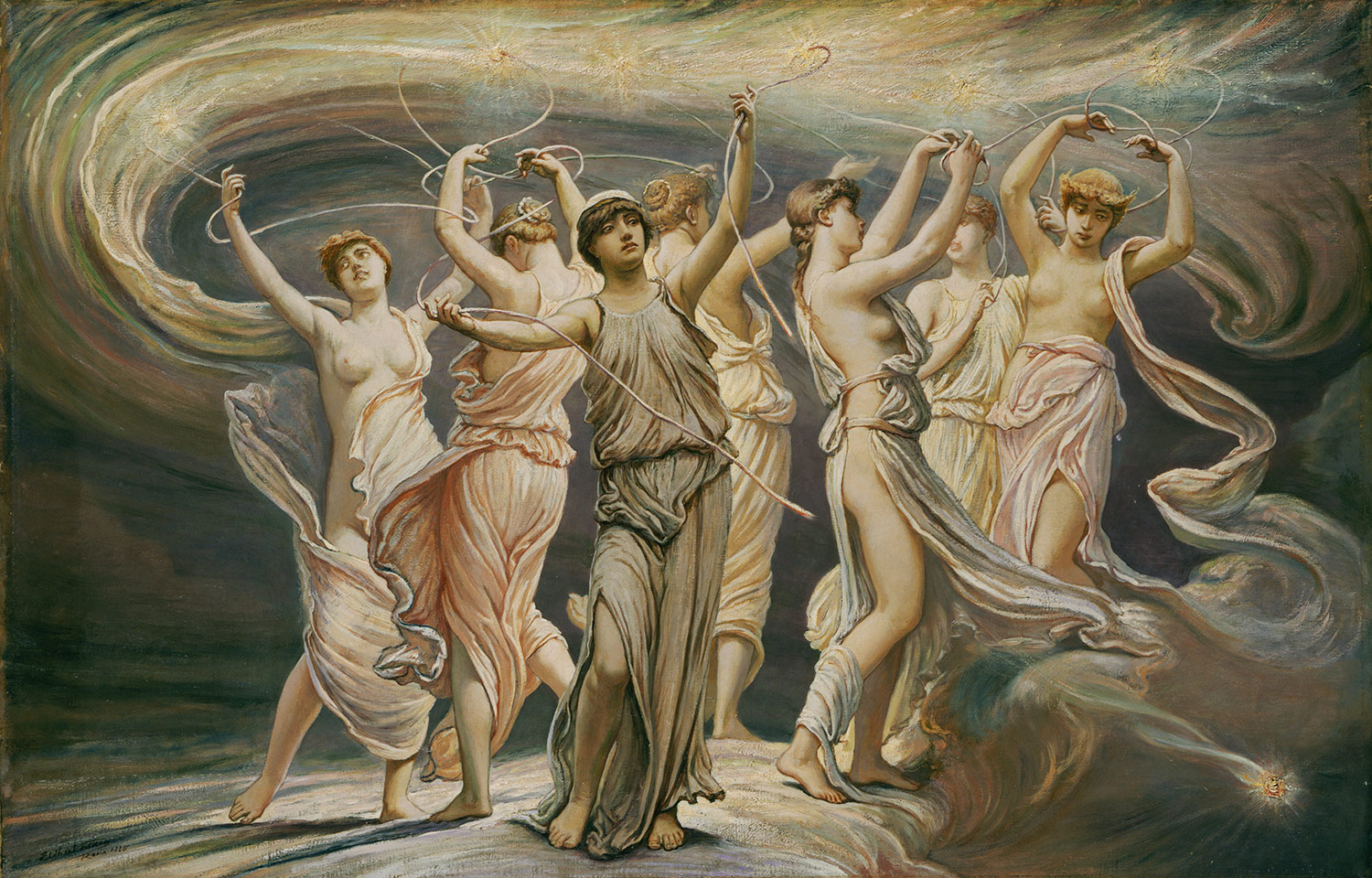
The ancient Greeks believed the Pleiades were the daughters of Atlas (son of Poseidon) and the sea-nymph Pleione.  There are several accounts of how they came to be immortalized in the night sky.

One legend says after Atlas was forced to bear the weight of the heavens on his shoulders, the giant huntsman Orion relentlessly pursued his daughters.  In sympathy, Zeus transformed the Pleiades into doves, and then into stars so Orion couldn’t get them.  Another legend recalls that the daughters killed themselves in grief due to the fate of their father, and Zeus placed them in the heavens to memorialize them.

In any case, they were symbols of honor, purity and loyalty.

The Pleiades, oil on canvas, by American Painter Elihu Vedder (1836-1923)

The legend of the “lost sister” pervades ancient world and indigenous folklore, and likely arose from the fact that only six of the stars are consistently visible to the naked eye.  According to astronomer Steven Gibson, the lost sister was alternately identified as Electra, who veiled her face at the burning of Troy; or Merope, who brought shame on herself by marrying a mortal; or Calaeno, who was struck by a thunderbolt.

As I was researching Atlantis mythology, the lost sister mystery turned into rich source material for this first novel of mine about the legendary kingdom — a lost civilization, and a lost princess.

Here’s a little verse about the Pleiades by Alfred Lord Tennyson, from his poem Locksley Hall.

Many a night I saw the Pleiads, rising thro’ the mellow shade,

Glitter like a swarm of fireflies tangled in a silver braid.

Some Artwork for My Book

They say you need a project while waiting to hear back from agents, and mine has been imagining cool artwork that could go along with my book.  Fantasy maps and family emblems – that kind of thing.  I have absolutely no talent in the fine arts, but luckily my honey has been helping out in that department, working from my primitive sketches.

So I’m ready to unveil a few prototypes just for fun.  My novel THE SEVENTH PLEIADE has a rather large cast of characters, grouped by family clans, who I derived from Plato’s account of Poseidon’s ten sons—five sets of twins—in the Critias dialogues:

“The name of the eldest son was ATLAS, who was king of the entire island, and from him the Atlantic Ocean takes its name.  His twin brother was called, in the Atlantean language, GADIR.  He had for his portion the extremity of the island near the Pillars of Hercules, and that part of it has since borne the name Gadiric.  The next pair of twins were called AMPHISOS and EUDEMON, and the others respectively MNESEUS, AUTOCHTHONOS, ELASSIPOS, MESTOR, AZAES and DIAPREPOS.

These princes reigned in prosperity in the island for several centuries, and established a supremacy in the midst of the ocean over many other islands, as well as over those which are near Egypt and Tyrrhenia.”

From this passage, we get the legend of ten Kings, an oligarchy that passed down through generations.  Each filial line became a family clan.  I came up with symbols for the royal Houses, and names for their descendants who—at the time of THE SEVENTH PLEIADE—are dozens of generations removed from their founding fathers.

Based on Plato’s account, and ancient world customs, I imagined the royal society as patriarchal, with sovereignty passing from father to son, based on birth order, resulting in a long list of Crown Princes in line for the throne:  the King’s brothers, sons, grandsons, nephews or even cousins depending on the case.  Thus, the main characters from my story are indicated as firsts, seconds, thirds, etc.

Here, I’ve only indicated the families who play a prominent role in my story. 

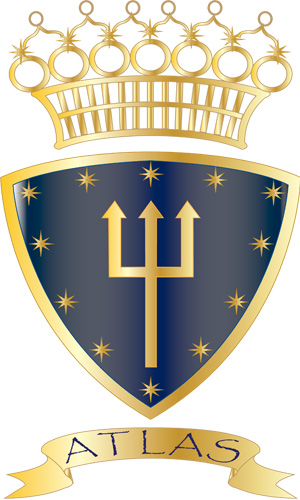
The House of Atlas

Governor:  PYLARTES

Province:  The island of Atlantis and its surrounding Cays

Governor’s wife:  THESSALA

Crown Princes: First – AERANDER (Pylartes’ only son); Second – ARTEMON (Pylartes’ eldest nephew)

Governor’s daughters (Princesses):  ALIXA and DANAE

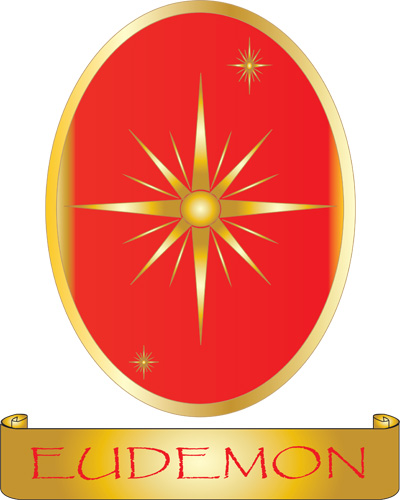
The House of Eudemon

Governor:  EULIAN

Province:  The Fortunate Isles

Governor’s Wife:  GRECIA

Crown Princes: Fourth – LYSIMACHOS (Eulian’s eldest son); Sixth – CORYDALLUS (son of Eulian’s eldest brother) ; Seventh – CORYTHYLLES (twin brother of Corydallus); Eighth – KOSMOS (son of Eulian’s younger brother); Ninth – LEONITOS (Kosmos’ younger brother)

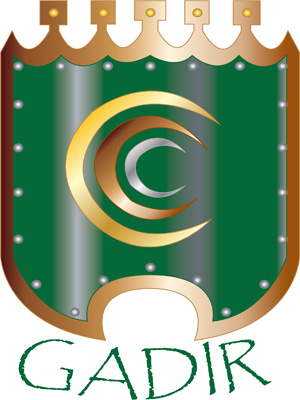
The House of Gadir

Governor:  HESPEROS

Province:  Upper Azilia

Governor’s Wife:  MERYLIBUND (deceased)

Crown Princes:  Thirteenth – DARDANOS (Hesperos’ third-born grandson); Fourteenth – EVANDROS (Dardon’s younger brother)

What did the Atlanteans look like?

A friend who started reading my manuscript asked me this question recently, and it caught me by surprise.

I had a good picture in my head of most of the characters.  But I used physical description sparingly in my manuscript because, as a reader, I like letting my imagination shape my view of a character’s appearance.

The exception is when there’s some well-placed, evocative trait.  I’m reading David Malouf’s RANSOM now, and Hermes’ “golden hair hanging in ringlets” is a great example.

But the question made me realize I had taken a lot for granted with my readers.  Atlantis conjures up a huge range of images, from extraterrestrials to mermaids.  So the ancient world sensibility I was trying to get across may not be immediately apparent even though the character and place names should be familiarly ancient world—Greek and Egyptian in particular—to some.

The main character is named Aerander.  His love interest is Calyiches.  His nemesis is the High Priest Zazamoukh.

Without geeking out too much (hopefully), let me explain that the inspiration for my Atlantean world comes from the cultural diffusion theory proposed by Lewis Spence.   Atlantean civilization began around the 10,000 B.C.E..   It declined ten centuries later, and was destroyed by natural disasters and invaders from Western Europe.  Were there survivors and what happened to them are questions that my novel THE SEVENTH PLEIADE seeks to answer.

According to Spence, Atlantis was located in the vicinity of the Canary Islands, where conditions were optimal for a flourishing Neolithic civilization.  Its evidence lies in the spread of an “Atlantis culture complex” most notably to North Africa, Mediterranean Europe and Central and South America.

My premise is the Atlanteans migrated from the Iberian peninsula—though they claimed to be descendants of titan gods—and they came into contact with Northern and Western Africans (who I call Mauritanians and Tamanans), Northern and Southern Americans (who I call Lost Pangeans and Lemurians), and Europeans (who I call Azilians).

As such, Atlanteans and their contemporaries wouldn’t have looked much different than ancient world peoples, or us modern day folks for that matter.

Atlanteans didn’t have blue skin or gills or fishtails.

Marvel Comics interpretation of the Atlanteans, Homo mermanus

An interesting theory is the Atlanteans are ethnically linked to the ancient Guanches and Berbers whose origins have been elusive to anthropologists.

The Guanches were first described by a 12th century Arab geographer Muhammad Al-Idrisi who visited the Canary Islands and found a mysterious indigenous population.  He wrote about visiting a village:  “whose inhabitants have long and flaxen hair and the women are of a rare beauty.”  No one knows how the Guanches came to arrive on the Atlantic island.

Similar to the ancient Berbers (who lived in the evocatively named Atlas Mountains of Northern Africa), the Guanches are described as physically distinct from their Mediterranean and North African neighbors.  They were tan in complexion but tall in stature and tended to be fair haired.  These characteristics lend themselves to a rich mythology, which I propose the Atlanteans capitalized on.  They were the sons of gods, the “chosen ones.”  With their high-minded claims to heredity, they managed to colonize the pre-historic world.

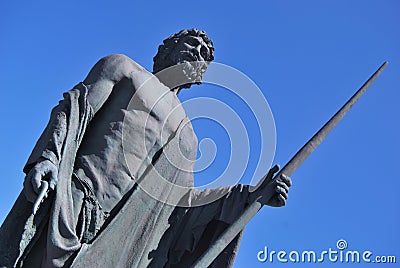
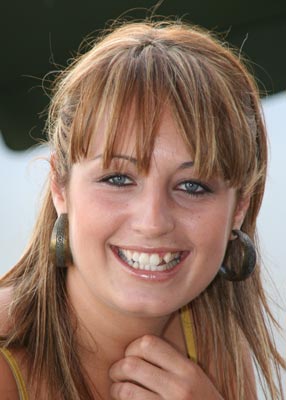
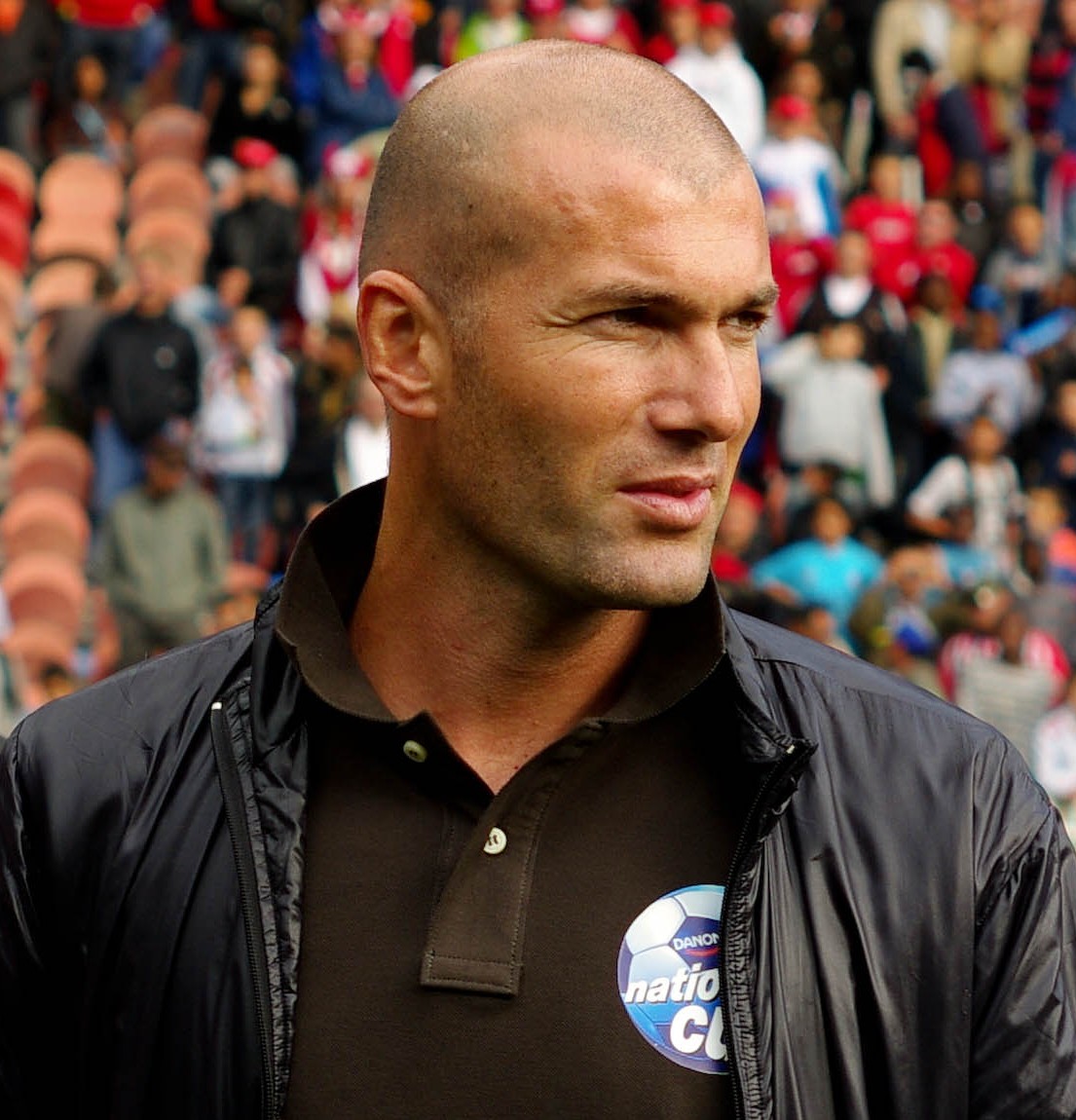
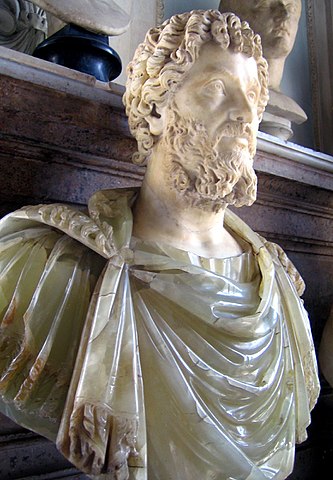
Here are some of my references for what the Atlanteans might have looked like.


A Guanche statue from Tenerife, Canary Islands

One of the Guanche Statues from Tenerife, Canary Islands

A young woman of Guanche descent

French star soccer player Zinedine Zidane, of Berber descent

French actor Fu'ad Ait Aatou of Berber descent

French actor Fu’ad Ait Aatou of Berber descent

Roman Emperor Septimus Severus, ancient Berber heritage